By
In this guide
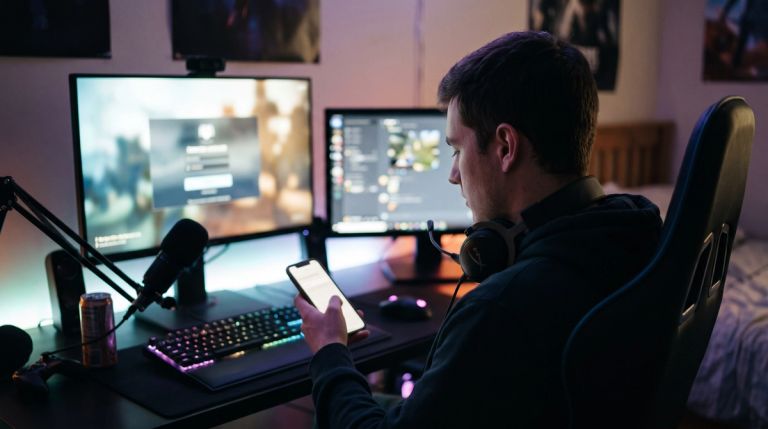
You've downloaded a new multiplayer game, created your account and are ready to jump into your first match. Then, just as you're about to play, another screen appears: Verify your phone number to continue.
It's a familiar frustration for PC and console gamers. Why does a game need your mobile number when you've already supplied an email address, created a password and possibly paid for the game itself?
The answer goes beyond account security. Phone verification has become another tool in the fight against cheating, smurfing, automated bots and account abuse. It's particularly relevant in competitive games where maintaining fair matchmaking can be difficult.
Here's why developers use it, what actually happens when you verify your number, and how to resolve the most common problems.
Why Do Games Require Phone Number Verification?
Creating a new email address takes seconds. For someone repeatedly banned from a multiplayer game, making another account can be surprisingly easy.
A working mobile number is harder to replace, especially when the publisher requires a genuine carrier-issued number rather than a temporary online alternative.
By linking accounts to phone numbers, developers can make repeated abuse more inconvenient and expensive.
There are several reasons for introducing this requirement.
1. Reducing Cheating and Smurfing
Smurfing happens when experienced players create alternative accounts, often to compete against less experienced opponents or avoid restrictions on their main accounts.
It can be particularly frustrating in ranked multiplayer games, where balanced matchmaking is essential.
Phone verification doesn't eliminate the problem, but it creates an additional obstacle.
For example:
- Dota 2: Valve requires players to associate a qualifying phone number with their account before accessing ranked matchmaking.
- VALORANT: Riot Games uses SMS verification for its Premier competitive mode to discourage players from entering tournaments using smurf accounts.
- League of Legends: Players participating in Clash tournaments must complete phone verification.
- Blizzard games: Some titles and account features require a phone number linked to Battle.net.
These systems vary considerably. A game might require verification for every new account, while another only introduces the requirement when players enter competitive modes.
The distinction matters: phone verification is not necessarily required to play every mode of a game.
2. Making Life Harder for Bots
Free-to-play multiplayer games are especially vulnerable to automated accounts.
Bots can be used to farm rewards, distribute spam, exploit in-game economies or create accounts for resale.
When thousands of registrations can be generated automatically, traditional email verification offers limited protection.
Requiring a valid mobile number creates another barrier to large-scale account creation.
It's not a perfect defence. Determined operators can still obtain additional numbers, but the extra expense and effort can discourage some forms of abuse.
3. Improving Account Security
Gaming accounts are valuable targets.
A Steam, PlayStation, Xbox or Battle.net account might contain years of purchases, rare cosmetic items, saved progress and linked payment information.
Depending on the platform, a verified phone number can provide an additional way to confirm account ownership, receive security notifications or assist with account recovery.
However, verifying a phone number for competitive eligibility isn't the same as enabling two-factor authentication.
For stronger protection, use a unique password alongside an authenticator app or passkey wherever supported.
We've previously covered the risks of reusing passwords across gaming and streaming accounts, particularly when multiple services are connected.
What Happens When You Verify Your Phone Number?
Although the process looks simple, several checks can take place behind the scenes.
Most gaming platforms use a straightforward SMS verification system:
- You enter your mobile number. The game asks for your country code and phone number, usually through its account settings or verification screen.
- The system checks eligibility. Depending on the publisher, it may assess the number's format, country, carrier type and whether it's already linked to another account.
- A temporary code is generated. The verification service creates a one-time code that typically expires after a limited period.
- An SMS is sent. The code is delivered to your mobile number through a messaging provider and mobile network.
- You confirm the code. Entering the correct code proves that you can receive messages sent to that number.
Once verification succeeds, the platform records the verified status against your account.
You generally won't need to repeat the process every time you launch the game, although additional checks may be required after account changes or suspicious activity.
Why Some Games Reject Virtual Phone Numbers
Here's where phone verification becomes more complicated.
Not every number capable of receiving a text message is eligible for gaming verification.
Many virtual numbers operate using Voice over Internet Protocol (VoIP), meaning calls and messages are handled through internet-based services rather than a conventional mobile connection.
These services have legitimate uses, including protecting personal privacy and separating business communications from private ones.
However, gaming platforms frequently restrict them because virtual or temporary numbers can undermine systems designed to limit repeated account creation.
Valve, for example, explicitly states that online virtual phone number services do not qualify for Dota 2 ranked matchmaking.
Riot Games similarly excludes certain internet-based numbers, including Google Voice, from its tournament verification system.
What If You're Playing from Another Country?
International players can face an additional challenge when their phone number and account region don't match.
This might happen after moving abroad, changing mobile networks or attempting to access a service associated with another country.
Battle.net, for instance, can reject numbers that don't match the registered country of an account.
For people legitimately needing a US number while travelling or living overseas, there are several possibilities, including carrier-issued SIM cards, suitable eSIM plans and virtual phone services.
Surfshark offers a useful explanation of how to get a US phone number for SMS verification, covering different options and their limitations.
One important distinction: obtaining a US number doesn't guarantee that a game will accept it. Virtual and VoIP numbers are specifically blocked by some publishers, while other services may require the number to match your registered account country.
An eSIM isn't automatically a virtual number, either. What matters is the underlying provider, the number's eligibility and whether the plan supports the SMS messages you need.
Before purchasing a second number, check the game's official requirements. If you've genuinely relocated, updating your account's registered country through its official support process may be the appropriate solution.
Phone Verification Not Working? Try These Fixes
Few things are more annoying than being locked out of ranked matchmaking because a verification code never arrives.
Fortunately, many problems have straightforward explanations.
Check Your Country Code and Number Format
Entering a valid mobile number with the wrong international prefix can prevent delivery.
For example, the United Kingdom uses +44, while the United States and Canada use +1.
Check whether the game expects the country code in a separate field, and follow its instructions regarding the leading zero in your local number.
Check Whether Your Number Is Already Registered
Some publishers limit how many accounts can share a phone number.
For instance, Riot's tournament verification system allows one Riot account per number.
Removing a number doesn't necessarily make it immediately available for another account, either.
Riot imposes a six-month waiting period before a removed number can be used on a different account. Dota 2 has its own reassignment restrictions.
If you're planning to switch accounts, check these limitations before unlinking anything.
Avoid Requesting Too Many Codes
Repeatedly pressing the resend button can make matters worse.
Verification services commonly limit how frequently codes can be requested to prevent automated abuse.
Riot advises waiting after certain verification errors and warns that requesting multiple codes within a short period can trigger rate limits.
Instead of generating another code immediately, allow time for the original message to arrive.
Check Your Mobile Network
Some carriers filter automated texts, international messages or short-code SMS.
If ordinary texts are arriving but verification codes aren't, your network provider may be able to explain whether these messages are supported or blocked.
Also confirm that your phone has mobile coverage and that you haven't accidentally filtered the message as spam.
Contact the Publisher's Official Support
If your number meets the stated requirements and verification continues to fail, use the publisher's official support channels.
Avoid third-party services promising guaranteed verification. They may use shared, recycled or ineligible numbers that could create account recovery problems later.
Is Giving a Gaming Company Your Phone Number Safe?
For an established publisher, providing a phone number through its legitimate account system is generally a reasonable security step.
That doesn't mean the process is completely risk-free.
Phone numbers are personal information, and companies may retain them according to their privacy policies. You should understand how your data is used before linking a number.
There are also security threats to consider.
SMS phishing: Scammers sometimes impersonate gaming support teams and ask players to reveal verification codes. Never share a one-time code with someone contacting you through chat, email or social media.
SIM swapping: An attacker may attempt to convince a mobile provider to transfer your number to another SIM, allowing them to intercept security messages.
Number recycling: If you abandon your phone number, it may eventually be reassigned to someone else. Remember to update your linked gaming accounts when changing numbers.
Where available, an authenticator app or passkey provides stronger protection against several weaknesses associated with SMS authentication.
Frequently Asked Questions
Can I Play Games Without Phone Verification?
Often, yes. Requirements vary between publishers and individual game modes. Some games allow casual play without a phone number but require verification for ranked competition or tournaments. Others may require it when creating or accessing an account.
Do Prepaid SIM Cards Work for Gaming Verification?
Sometimes. It depends on the publisher, mobile carrier and account requirements. A prepaid SIM isn't automatically accepted or rejected across every gaming platform. Check the relevant support documentation before purchasing one specifically for verification.
Can I Use the Same Phone Number for Multiple Games?
Yes, in many situations, although account-level restrictions apply. Riot Games, for example, allows a single verified Riot account to satisfy SMS requirements for both VALORANT Premier and League of Legends Clash. Different Riot accounts cannot share the same number for those tournament modes.
What Happens If I Lose Access to My Verified Number?
You may need to follow the publisher's account recovery or number-change procedure. If you're switching mobile providers, update your gaming accounts while you can still receive messages on the old number whenever possible.
Final Thoughts
Phone verification might feel like an unnecessary obstacle when all you want to do is play a game, but it serves a genuine purpose.
By making accounts harder to create and replace, developers can reduce some forms of cheating, smurfing and automated abuse. Phone numbers can also support account security, although they shouldn't replace stronger authentication methods.
The system isn't flawless, particularly for players using virtual numbers, travelling internationally or changing carriers.
Ultimately, the best approach is simple: use a number that meets the publisher's requirements, keep your account information up to date and never share your verification codes.
A few minutes spent setting things up properly can prevent far bigger headaches when you're ready for your next ranked match.

Written by
Jessica ThompsonAs a dedicated gaming journalist with over five years of experience, I've immersed myself in the ever-evolving world of video games. Currently, I contribute to Gamerbolt.com and PS6news.com, where I cover the latest in gaming news, in-depth game reviews, and industry trends. At Gamerbolt.com, I've had the privilege of shaping content strategies, writing comprehensive articles, and engaging with a passionate community of gamers. My role involves not only crafting engaging narratives but also staying ahead of the curve with the latest gaming innovations and upcoming titles.