In this guide
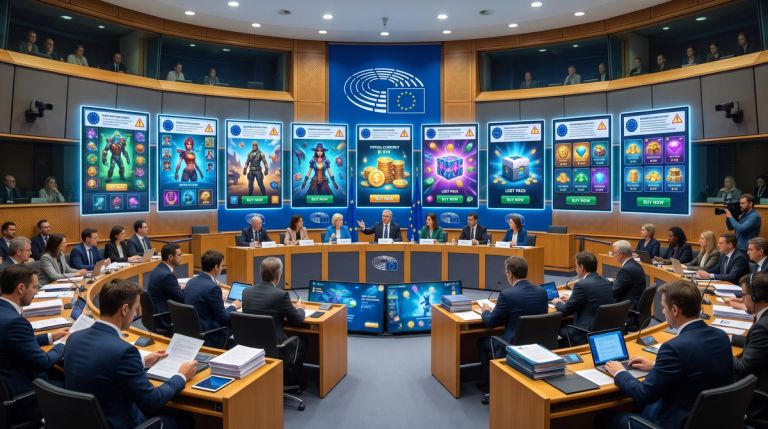
September 30, 2026, marks the day the European Commission and the Consumer Protection Cooperation (CPC) Network turned their attention to a regular gaming staple: in-game currency. As a result, nine video game companies are now being scrutinized over how their games sell and present virtual currencies.
For those of you who have bought a bundle of in-game currency to unlock a new skin or upgrade your character, you’ve likely noticed that the price you initially see doesn’t tell you much about its worth. Perhaps you see that an item costs 500 gems, but how much are those gems actually worth? And if you have to buy a 1,000-gem bundle to get it, you’re spending money on extra credits you might not even use.
These questions are exactly what prompted the EU’s latest concerns. Consumer protection authorities worry that virtual currencies can make it harder for players to grasp what they’re spending and make informed purchasing decisions. Essentially, could certain currency bundles and sales practices encourage unnecessary spending?
The nine companies involved are King, InnoGames, Crytek, Plarium, PLR Worldwide Sales, Riot Games, Ubisoft, Supercell, and Mojang. The games under examination are:
- Candy Crush Saga
- Forge of Empires
- Hunt: Showdown 1896
- Mech Arena
- Gardenscapes
- Valorant
- For Honor
- Clash of Clans
- Minecraft
Regulators are looking to address potential consumer protection issues and review whether practices comply with current rules. As a result, everyday parts of gaming are now coming under the microscope.
Why Virtual Coins Can Make Real Money Harder to Track
Buying something within a game doesn’t usually involve paying for it directly. Many modern games use their own virtual currencies, such as gems, tokens, coins, or points, which are purchased with real money and used to buy upgrades or access additional content. It’s a system that adds an extra step between paying for something and seeing what it actually costs.
Instead of displaying a price for something in-game in euros or dollars, a game might list a character outfit for 850 gems. Players then have to work out how much those coins are worth based on the available currency packages. Most of the time, these games don’t allow players to buy currency individually and, instead, present them as packages. If the smallest bundle contains 1,000 coins, they will need to spend more than the item itself costs, leaving them with coins they can’t necessarily use for another purchase.
Because players can find it difficult to understand how much they’re paying over time or recognize when a purchase is more expensive than they expected, European consumer protection authorities are taking notice. While selling virtual currency isn’t inherently unlawful, the concerns are about how those currencies are priced and marketed to players and whether the information aligns with EU consumer protection requirements.
In-Game Currency vs. Real-Money Gaming Transactions
Virtual currencies aren’t exclusive to conventional video games. However, currencies in traditional games generally don’t have any cash value and can’t be exchanged for real money. In online casino games, by comparison, players wager real money from their casino accounts for the chance to win cash payouts. Even when an operator displays balances in units or credits, those balances represent real money in equivalent amounts that can be used for gambling.
That alone is a huge distinction when looking at the difference between in-game currency and real money. Virtual coins used to purchase an in-game item aren’t the same as funds placed on a casino bet. The two systems have different financial purposes, despite both involving digital transactions. The EU’s latest moves aren’t about regulating all these forms of gaming but simply about making sure players know the real-world cost of virtual currency and that gaming companies are upfront about what they’re charging.
How the EU Wants to Make In-Game Spending Fairer
Regulators primarily want players to understand the terms of their purchases, know what rights they have, and have enough information to make decisions without feeling pressured to spend more. In March 2025, the CPC Network outlined several expectations concerning how games present prices, handle consumer rights, and sell virtual currency. Games should also avoid purchase systems that require consumers to buy more credits than necessary.
Going beyond currency alone is the concern of withdrawal rights. Consumers need to receive information about their ability to cancel eligible purchases within the standard 14-day right of withdrawal. The guidance also addresses the need to consider vulnerable consumers, such as children, who could be less likely to recognize the financial implications of game purchases. As younger players have less experience managing money, they may have little knowledge of how to calculate leftover balances or have trouble recognizing how individual purchases add up over time. Especially since children are commonly accessing games with in-game shops and paid virtual currencies, straightforward purchase conditions are more relevant than ever.
These principles are based on existing EU consumer protection legislation and provide developers guidance on presenting prices and handling purchases more fairly. On September 30, the CPC Network took the next step by engaging with the nine companies over potential compliance issues. Rather than treating these concerns as established violations, the Network is giving companies a chance to respond to any concerns and make changes where necessary.
What Happens Next for the Nine Gaming Companies?
The CPC Network has kickstarted discussions with the nine companies to address these concerns, enabling developers and publishers to explain their practices and respond to questions about their virtual currency. Depending on what these discussions uncover, these companies might be asked to change commercial practices that are considered inconsistent with EU consumer protection requirements. If concerns aren’t resolved, authorities might implement further enforcement measures.
Of course, this action could have implications beyond the nine companies under scrutiny. Even those in the gaming industry that aren’t part of the discussion could be prompted to take a closer look at how they price digital items. For example, developers might make it easier for players to understand what an item costs before buying it. Companies might also reconsider how they structure currency bundles.
The CPC Network aims to preserve high standards of consumer protection relating to video games, protecting players and building trust within the industry. For now, it’s too early to know what changes each specific company will make, but this case reflects growing attention to consumer rights attached to gaming. The EU isn’t asking the industry to consider abandoning virtual currencies. Rather, this process is about ensuring that existing consumer protection rules are applied to the way games sell them. Although we’re still waiting for the outcome, what happens next could set an important example for how virtual economies are managed.