By
In this guide
In most video games, difficulty is a slider. Easy, Normal, Hard, maybe a Nightmare mode. Chess bots work differently, and once you see how, a lot of the frustration people have with playing chess against a computer starts to make sense. Here is how chess bot difficulty actually works, why it feels so different from game AI, and how to pick an opponent that gives you a real game.
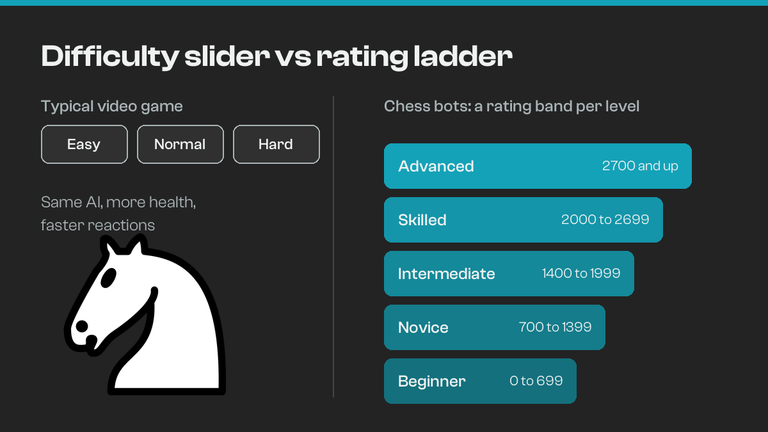
How video game AI usually scales
Game designers have a toolbox for difficulty, and most of it is about stats and timing:
- Enemies get more health, deal more damage or react faster.
- The AI gets more information, like seeing through fog of war.
- Rubber-banding keeps races close by slowing the leader or speeding up whoever is behind.
None of this makes the AI smarter in a human sense. It makes it tougher. That works in an action game, because the fun is in executing under pressure.
Why that approach breaks in chess
Chess has no stats to inflate. Both sides have the same pieces, the same rules and the same information. The only thing a chess engine can change is the quality of its moves, and a full-strength engine plays far above any human. So the classic way to make an easy chess AI was to make a strong engine play badly on purpose: random blunders, a shallow search, or a mistake every few moves.
That is where the strange feeling comes from. A weakened engine can play near-perfect moves for a while, then drop its queen for no reason. No human plays like that, so it teaches you very little about the games you will play against people.
Ratings instead of sliders
Chess already has a difficulty scale that means something: the rating. A rating is a number built from results, and the gap between two ratings predicts how often each side should win. Instead of Easy or Hard, a well-built chess bot has a rating, and it is calibrated to play like a person at that level.
| Rating band | Range | What games usually look like |
|---|---|---|
| Beginner | 0 to 699 | Pieces left hanging, early checkmates |
| Novice | 700 to 1399 | Basic tactics found, plans still loose |
| Intermediate | 1400 to 1999 | Solid openings, fewer one-move blunders |
| Skilled | 2000 to 2699 | Deep calculation, strong endgames |
| Advanced | 2700 and up | Very strong, precise play |
The bands above are a rough guide, not an official standard. A 1200-rated bot should make the kind of mistakes a 1200-rated person makes, instead of playing perfectly and then collapsing.
Personality is the other half of difficulty
Two players with the same rating can feel completely different to face. One attacks from move five, the other trades pieces and waits for you to go wrong. Gamers know this from fighting games: two characters can be equally strong and still demand totally different answers.
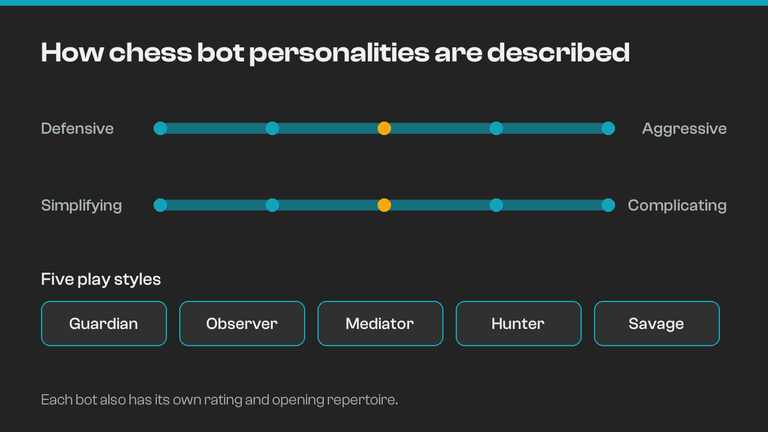
Newer chess bots model this directly, and Chessiverse is one example. For anyone playing chess games against computer opponents there, its bots are described along two axes, defensive to aggressive and simplifying to complicating, and grouped into five play styles: Guardian, Observer, Mediator, Hunter and Savage. Each bot also has its own opening repertoire, and the roster runs from beginner level to over 3,300. Its bot ratings aim to mimic Lichess blitz ratings, so the number means roughly what it means online.
A mistake you see at every level
Whatever the rating, plenty of games end the same way: someone forgets about their own back rank.
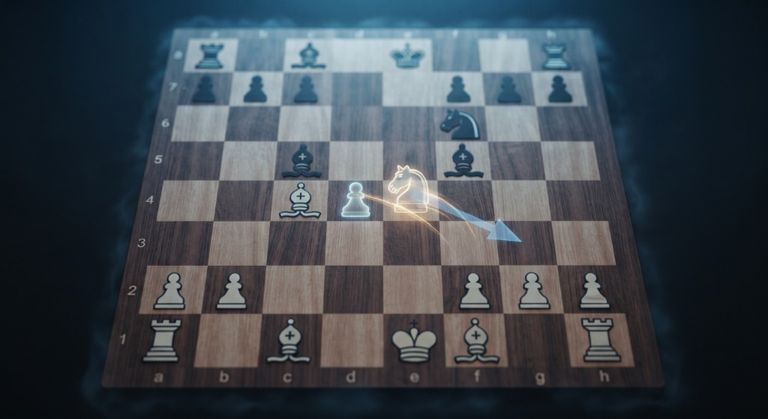
It happens to strong players too. In a 1914 exhibition game in Moscow, José Raúl Capablanca moved his queen to b2, where Ossip Bernstein could simply take it. Bernstein resigned instead: capturing the queen would have allowed Rd1, checkmate on his back rank. The pattern repeats at every level: castled pawns that never moved and a rook pulled off the first rank.
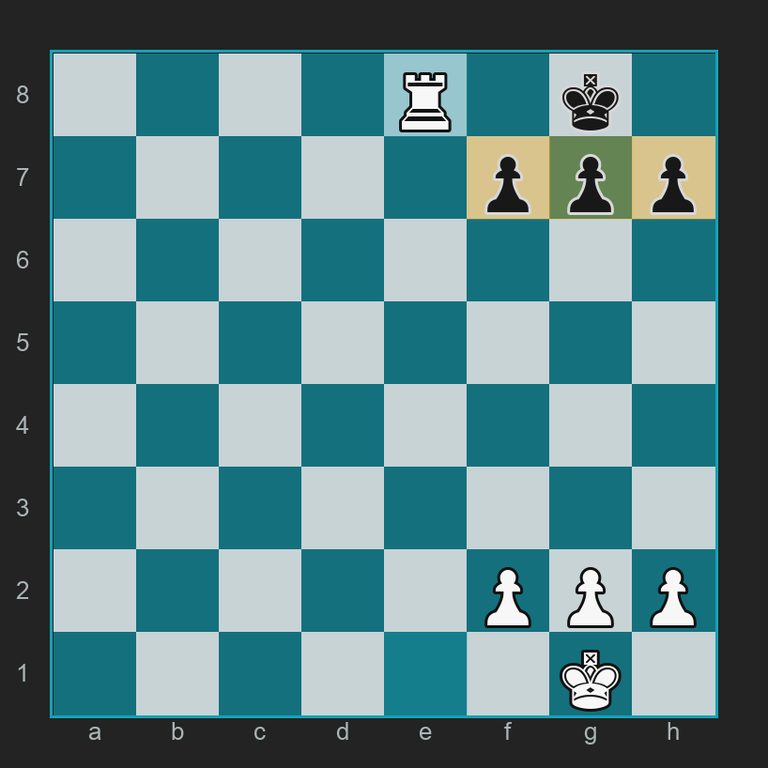
In this position the rook lands on e8 and the king has no escape, because its own pawns block f7, g7 and h7. A human-like bot near your level will set and fall for traps like this at a realistic rate, which is what makes practicing against it useful.
How to pick the right difficulty
- Start one band below where you think you are, and move up after you win about half your games.
- Play the same bot a few times before switching, so you learn its habits.
- Try one aggressive and one defensive opponent at the same rating. The one you lose to more often shows you what to practice.
Treat a chess bot the way you treat a training mode in a competitive game: a place to test ideas without anything at stake, before you take them online.
Where chess bots are heading
For a long time, the only way to make a chess computer easier was to make it worse. That is changing. The newest bots are built to play like people at a given rating, with their own openings, habits and blind spots. A loss to a bot then tells you something about your own game instead of about a random blunder.
The short version
Video game AI gets harder by getting tougher. A good chess bot gets harder by getting better, one rating band at a time. Pick a bot just below your level, give each opponent a few games and notice which style keeps beating you. The goal is not to beat the computer once, but to play enough realistic games that the next person across the board feels familiar.

Written by
Jessica ThompsonAs a dedicated gaming journalist with over five years of experience, I've immersed myself in the ever-evolving world of video games. Currently, I contribute to Gamerbolt.com and PS6news.com, where I cover the latest in gaming news, in-depth game reviews, and industry trends. At Gamerbolt.com, I've had the privilege of shaping content strategies, writing comprehensive articles, and engaging with a passionate community of gamers. My role involves not only crafting engaging narratives but also staying ahead of the curve with the latest gaming innovations and upcoming titles.