


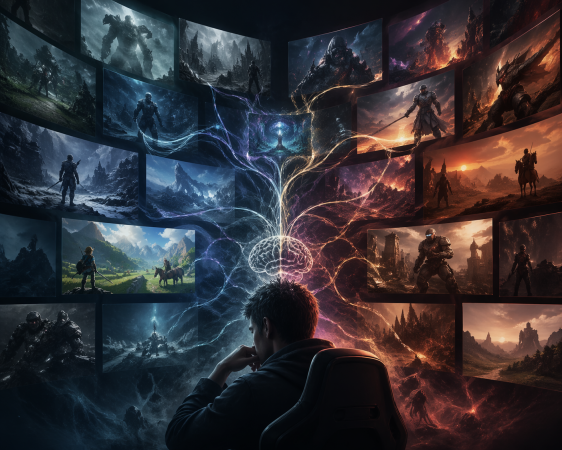

We’re constantly judging a game without even realizing it.
‘Visual echoes’ have a massive impact, with gamers instantly and subconsciously looking for or recognizing similarities from other games that harbour nostalgic feelings or that they loved to play. And that can positively or negatively affect gameplay, with some gamers making almost instant decisions about whether they’ll like the game.
Below, we’ll explore the concept of visual echoes and game ranking.
What Does Visual Echoes Mean?
Visual echoes simply mean familiar visual elements that remind gamers of other games. That doesn’t necessarily mean they’re direct copies, even if some are definitely a smidge away from being copyrighted versions of other games (PUBG and Fortnite are great examples).
Rather than direct copies, they’re more likely to have similar creative designs and visuals, user interface layouts, character design patterns, and general similarities in gameplay. You’ll see it more with some games than others. For example, casino games can sometimes be similar, especially slots, although you can find fresh mechanics and modern visuals if you search a few comparison websites.
The issue for game developers is that players will recognize these similarities or direct copies. They’ll look at Fortnite, for example, and think that the drop zone looks so similar to one in PUBG. And the gameplay of those two definitely feels like a direct copy, and to make it worse, the reaction occurs before gameplay even starts, so it’s an instant judgment being made about game quality as the visuals give reminders of past experiences.
That said, a game can be visually similar but still unique. The issue is how players perceive it.
Sometimes, it’s done purposely, as familiar visuals can reduce friction and help players understand the game quickly.
How Much Influence Do Visual Echoes Have on Subconscious Game Ranking
We’ve said the word instantly a few times because it is that quick. Players will rank games within seconds of seeing them, and those first impressions can either make gameplay great or put a downer on it.
Some players would literally not play a game if they’re getting bad vibes because the gameplay reminds them of something else.
Sometimes, the influence happens before they’ve even pressed play, with trailers, screenshots, store pages, and online pre-release reviews having an impact on game quality ranking.
Most of the time, it’s down to the visuals in terms of first impressions and game quality ranking. Good visuals will signal good gameplay, and vice versa. Not that bad visuals should be a thing in 2026, but some indie games are definitely questionable.
You could also bring familiarity bias into it. A game that resembles a successful title will feel safer and more appealing to play, which, again, shows how visual echoes affect game ranking.
More than anything, many players decide whether to click, whether to download, and whether to buy purely on visuals.
Other Factors We’re Subconsciously Judging Games On
Visual echoes definitely have a role in game ranking, but there’s much more that goes into it.
Players, for example, will definitely judge the user interface and game interactions. They want a clean, smooth user interface that makes the game seamless to play. Linking to this is performance and responsiveness, with any gamer knowing how annoying it is to play a game that lags, frame drops, has slow menus, or constantly updates. Most games won’t play a game like that.
They’ll also look at sounds. Menu sounds, weapon sounds, noises, and ambient audio contribute to the overall appeal of the game.
And as we’ve mentioned, community perfection is on the list. Gamers are so interested in reviews and player feedback before they even buy a game, let alone play it.
As a gamer, you won’t even realize you’re doing all of this, but it’s interesting to understand how you might be using visual echoes as a game quality ranking factor. And if you feel like you don’t, what is your biggest game quality ranking factor?
