By
In this guide
- Key takeaways
- Ocarina of Time Switch 2 vs N64: quick comparison
- 1. The Switch 2 game is a full remake, not a remaster
- 2. Graphics: Hyrule has been completely rebuilt
- 3. Performance: from roughly 20fps to 60fps
- 4. A freely controlled camera changes exploration
- 5. Link can now jump and dash whenever needed
- 6. The Water Temple is considerably less frustrating
- 7. Boss encounters provide clearer feedback
- 8. Characters now speak in voiced cutscenes
- 9. The soundtrack has received an orchestral overhaul
- 10. You can play the ocarina using the Switch 2 microphone
- 11. Threads of Time helps players follow the story
- 12. New bonus activities and boss rematches
- 13. ZELDA NOTES adds companion-app activities
- 14. Hyrule’s day-and-night cycle is more consistent
- 15. What has Nintendo deliberately left unchanged?
- 16. What is missing from the Switch 2 remake?
- 17. How does the Switch 2 remake compare with Ocarina of Time 3D?
- Which version of Ocarina of Time should you play?
- Frequently asked questions
- Final verdict: the same masterpiece, rebuilt for a new generation
Few video games have a legacy quite like The Legend of Zelda: Ocarina of Time. Released for the Nintendo 64 in 1998, it helped establish the foundations of modern 3D action-adventure games, introducing a generation of players to Hyrule Field, Z-targeting and a story that unfolds across two periods in Link’s life.
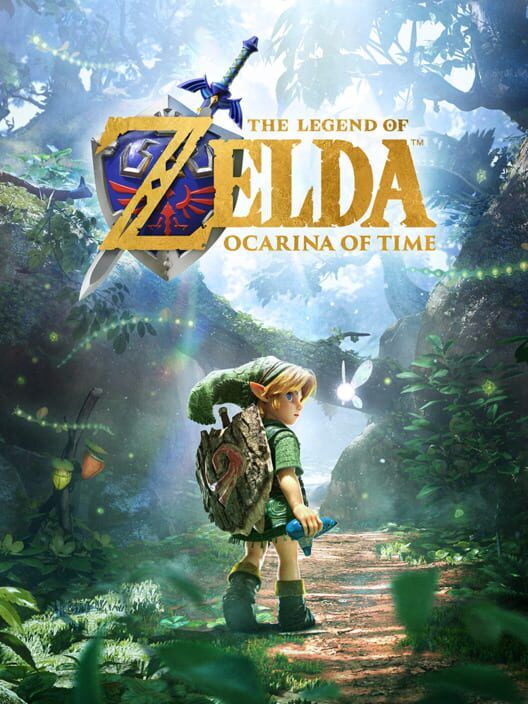
Twenty-eight years later, Nintendo has returned to one of its most celebrated adventures with a full remake for Nintendo Switch 2. Released on 5 November 2026, the new Ocarina of Time is far more than the original game running at a higher resolution — Nintendo has rebuilt the environments and characters, introduced modern movement and camera controls, recorded new music and dialogue, and made some significant improvements to the game’s more frustrating sections.
Yet perhaps the most interesting thing about this remake is how much Nintendo has deliberately refused to change. The developers wanted to modernise the experience without losing the structure, pacing and sense of discovery that made the original so special.
So, how does Ocarina of Time on Switch 2 really compare with the 1998 Nintendo 64 version? Here are the biggest changes, the features that have survived and a few surprising omissions.
Key takeaways
- A genuine remake: Nintendo rebuilt the game from the ground up rather than simply enhancing the original N64 code.
- Much smoother performance: the remake targets 60fps, compared with the original’s roughly 20fps.
- Modern controls: manual jumping, dashing and free right-stick camera movement substantially change how Link handles.
- More accessible dungeons: the Water Temple has received particular attention, with clearer navigation and easier equipment management.
- New extras: voiced cutscenes, an orchestral soundtrack, Threads of Time, the Hall of Fallen Foes and microphone-based ocarina controls expand the experience.
- The same fundamental adventure: Hyrule, its central story and the traditional dungeon progression remain recognisably Ocarina of Time.
Ocarina of Time Switch 2 vs N64: quick comparison
| Feature | Nintendo 64 (1998) | Switch 2 (2026) |
|---|---|---|
| Game version | Original release | Ground-up remake |
| Graphics | Original low-resolution 3D | Rebuilt models, environments and lighting |
| Frame rate | Approximately 20fps | Mostly stable 60fps |
| Camera | Contextual camera and Z-targeting | Free right-stick camera |
| Jumping | Automatic at certain edges | Dedicated manual jump |
| Running | Standard movement and rolling | Added dash movement |
| Combat | Original controls and animations | Updated controls and clearer feedback |
| Dialogue | Primarily text | Expanded dialogue and voiced cutscenes |
| Music | N64-era synthesised soundtrack | Re-recorded, orchestral arrangements |
| Ocarina | Controller button inputs | Button inputs plus microphone recognition |
| Dungeons | Original layouts and mechanics | Mostly preserved, with targeted adjustments |
| Quest tracking | Limited contextual guidance | Threads of Time story tracking |
| Boss challenges | Standard story encounters | Hall of Fallen Foes replay feature |
| Day/night | Original location-dependent cycle | More continuous progression, including towns |
| Save system | Multiple in-game save slots | One manual save slot per user profile reported |
| Platform | Nintendo 64 | Nintendo Switch 2 exclusive |
The performance figures reflect post-release technical analysis, while the main feature changes are confirmed in Nintendo’s official announcements and developer interviews.
1. The Switch 2 game is a full remake, not a remaster
The first and most important distinction is how the new game was made. A remaster generally takes an existing game and improves its presentation — sometimes enhancing resolution, textures, performance or controls while retaining much of the underlying software. Nintendo took a different approach.
In its November 2026 Ask the Developer interviews, the development team explained that the age of the original technology meant they needed to recreate the game from scratch. The team continually compared the new implementation with the Nintendo 64 version to preserve its original feel.
That is an important distinction. The developers weren’t simply trying to recreate individual scenes as faithfully as possible; they were attempting to preserve the way the entire adventure flows.
Producer Eiji Aonuma even described experimenting with new warp points around Hyrule to reduce travelling time. After testing them, the team removed the additions because they undermined the discoveries players make while travelling across the world. That decision says a great deal about the remake’s philosophy: Nintendo wants the new version to feel modern, but not at the expense of the journey.
Verdict: this is a substantial remake, although not a reinvention of the original game.
2. Graphics: Hyrule has been completely rebuilt
Visually, there is an enormous difference between the two releases. The Nintendo 64 original used relatively simple polygonal character models, modest textures and comparatively sparse environments. These limitations were normal for 1998, but they also helped establish the original’s distinctive atmosphere.
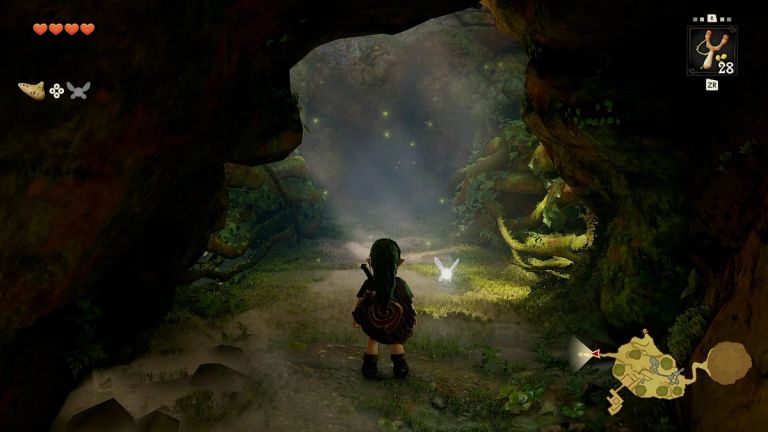
The Switch 2 remake transforms those locations with significantly more sophisticated geometry, lighting, environmental detail and character animation. Kokiri Forest is an especially effective example: where the original relied on simple environmental shapes and painted textures, the remake fills the forest with foliage, atmospheric lighting, textured tree bark and small visual details that give the environment a greater sense of physical presence.
The Great Deku Tree is more imposing, while the surrounding woodland looks considerably more natural. Hyrule Field benefits from richer vegetation and distant scenery, while areas such as Zora’s Domain and the Water Temple feature more elaborate material effects and reflections.
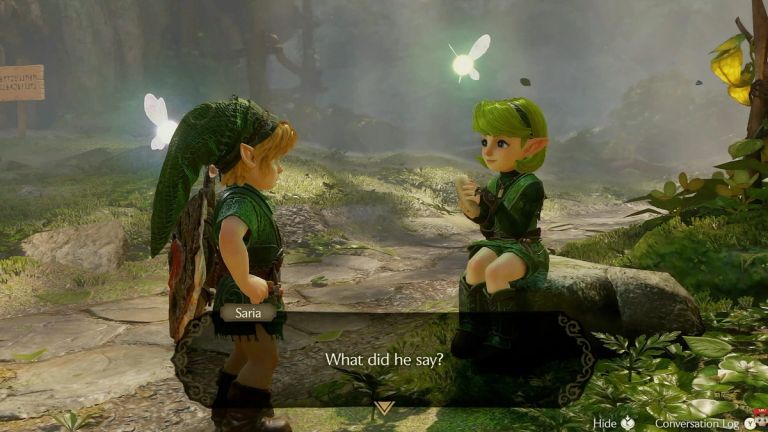
Nintendo’s artists deliberately avoided making the game completely photorealistic. In the official developer interviews, the team described drawing inspiration from puppetry and practical-effects fantasy films — the aim was to create a believable world while preserving the colourful, occasionally unusual character designs of the original.
That balance matters because Ocarina of Time has always mixed darker fantasy environments with light-hearted characters and memorable visual eccentricities. Some players may prefer the simpler, dreamlike appearance of the Nintendo 64 game; nevertheless, the new visuals make familiar locations feel far more substantial.
3. Performance: from roughly 20fps to 60fps
One of the biggest improvements is something screenshots cannot demonstrate. Ocarina of Time originally ran at around 20 frames per second on Nintendo 64, sometimes dropping lower in demanding situations. The 2011 Nintendo 3DS version improved the frame rate to approximately 30fps. On Nintendo Switch 2, the target is 60fps.
According to technical analysis by Digital Foundry, reported by Nintendo Life, the new version maintains that target consistently, with only occasional minor loading interruptions. The difference should be especially noticeable during sword combat, camera movement, exploration and encounters involving several enemies.
Resolution and handheld performance
Digital Foundry’s analysis reports dynamic resolutions of approximately 1080p to 1440p docked and 720p to 1080p in handheld mode. The remake also supports HDR output on compatible displays.
There are some technical compromises: handheld mode can show reduced distant detail and softer image quality, while reviewers have identified occasional shimmering in the presentation. Crucially, Nintendo has prioritised a smooth and responsive experience.
This matters more than the numbers alone suggest. When a game originally designed around much slower performance is carefully adapted to run at 60fps, movement and combat can feel substantially more immediate. Read Nintendo Life’s summary of Digital Foundry’s technical analysis for the detailed performance findings.
4. A freely controlled camera changes exploration
The original Ocarina of Time was hugely influential because of its Z-targeting system. Rather than requiring players to manually position a camera during every encounter, the game allowed them to lock their attention onto an enemy and maintain an appropriate viewpoint — an elegant solution to a problem that early 3D games were still struggling to solve.
However, free camera movement was limited compared with modern action-adventure games. On Switch 2, players can use the right analogue stick to look around the environments more naturally.
This makes an immediate difference when exploring places such as Hyrule Field, Death Mountain and the villages scattered throughout the world. It also changes how environmental details can be discovered: the developers had to reconsider certain areas because players could now inspect locations from viewpoints that were not possible in 1998, which required additional environmental work and adjustments to visual navigation cues.
The original targeting philosophy remains important, but players have far more control over how they experience Hyrule outside those situations.
5. Link can now jump and dash whenever needed
This is arguably the biggest gameplay change. In the original Nintendo 64 version, Link could not freely jump using a dedicated button — the game automatically triggered jumps when Link approached particular edges or gaps. This system worked well within the original game’s carefully designed environments, but it could feel restrictive to players accustomed to modern games.
The Switch 2 remake introduces manual jumping. Players can now press a button to jump, bringing the controls closer to more recent Zelda adventures. That seemingly simple addition required substantial changes behind the scenes: the developers had to account for situations in which players might jump onto objects or reach areas that were previously inaccessible, and they also had to consider the slight difference between Young Link’s and Adult Link’s jumping distances.
Dashing replaces endless rolling
Nintendo has also introduced a dash action. In the original game, repeatedly rolling forward was a popular way to move around more quickly. The remake preserves rolling but adds the ability to dash by holding the Roll Attack button — a straightforward quality-of-life improvement that makes travelling through Hyrule more comfortable.
Jump attacks have two control options
There is also an interesting compromise involving jump attacks. The modern control scheme allows players to jump and then attack, similar to the controls in more recent Zelda games. However, Aonuma preferred the original single-button jump attack — rather than choosing one approach, Nintendo implemented both. This is a good illustration of the developers’ efforts to accommodate returning players without alienating newcomers.
6. The Water Temple is considerably less frustrating
For many players, the Water Temple is one of Ocarina of Time’s most memorable dungeons, although not always for positive reasons. The original required players to manage water levels, navigate a complicated interconnected structure and repeatedly adjust equipment — constantly opening the menu to change equipment could interrupt the flow of exploration.
Aonuma, who was involved in designing the original Water Temple, specifically wanted to improve it for the remake. The Switch 2 version makes equipment switching easier and introduces changes intended to help players understand the layout. Some solid walls have been replaced with lattice-style structures, allowing players to see into neighbouring rooms and better understand how different parts of the dungeon connect.
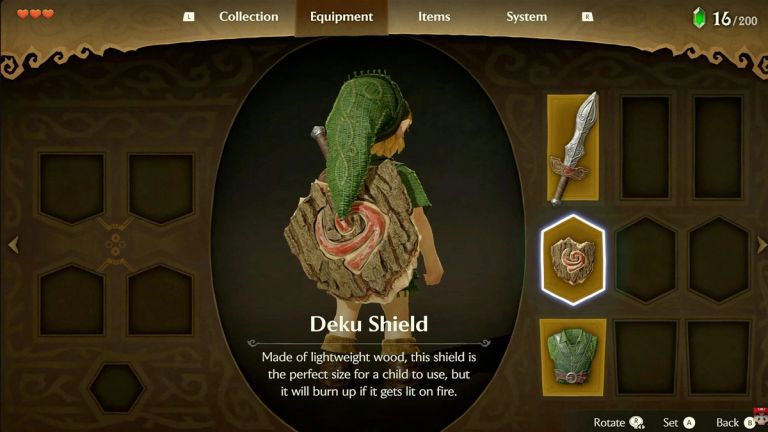
Nintendo has also made subtle adjustments to environmental objects and navigation cues elsewhere. Importantly, the Water Temple has not been discarded and replaced with an entirely different dungeon: the fundamental ideas and puzzles remain, but some of the unnecessary confusion has been addressed.
Verdict: a particularly welcome improvement for anyone who remembers becoming completely lost underwater in 1998.
7. Boss encounters provide clearer feedback
The improvements extend to combat and boss design. Nintendo’s developers discussed Queen Gohma, the first major boss encountered inside the Great Deku Tree. In the original game, successfully attacking Gohma depended on recognising the right moment when her weak point was vulnerable — but the visual feedback was not always clear.
For the remake, the developers made Gohma use the arms above her head to protect her weak point when attacks cannot damage her, giving the player a clearer indication of when an opening exists. The underlying encounter remains recognisable, but the mechanics are communicated more naturally.
Similar design considerations informed adjustments to other encounters. The result is not necessarily an easier game in every situation, but one that is more consistent about communicating its rules.
8. Characters now speak in voiced cutscenes
The original Ocarina of Time relied heavily on written dialogue. Characters communicated primarily through text boxes, supported by animations, reactions and short vocal sounds. The Switch 2 remake introduces fully voiced cutscenes, expanded dialogue and additional narrative presentation.
This gives scenes involving characters such as Zelda, Ganondorf and other major inhabitants of Hyrule a different atmosphere. Nintendo has also added new scenes that explore character interactions more fully.
That does not mean the original story has been replaced. The central narrative remains Link’s journey through two different periods of his life as he attempts to stop Ganondorf from seizing the Triforce — but the additional dialogue gives returning players new details to discover. The development team took particular care with the characters’ voices, aiming to preserve familiar impressions rather than simply giving everyone a completely new personality.
For players who remember the original, hearing important scenes performed instead of reading every line may be one of the most noticeable changes.
9. The soundtrack has received an orchestral overhaul
Music has always been central to Ocarina of Time. Koji Kondo’s original compositions include some of the most recognisable themes in gaming, from the atmospheric melodies of Kokiri Forest to the music associated with Hyrule Field and the Temple of Time.
Nintendo has completely revisited the soundtrack for the remake. The new version features more than 150 pieces of background music, including additional compositions for expanded cutscenes. Many tracks use live orchestral performances, giving the music greater depth and a broader dynamic range.
However, the developers did not simply make every melody louder and more dramatic. They carefully considered the original arrangements, using more restrained instrumentation for quieter scenes. Some recordings also incorporate recreated sounds inspired by the original Nintendo 64 sound sources, allowing the soundtrack to feel familiar even when its instrumentation is substantially different.
Environmental audio has also improved. In Kokiri Forest, for example, players can hear water flowing, leaves rustling and wildlife around them — these sounds change as Link moves through the environment. The remake additionally supports 5.1-channel surround sound, giving players with suitable equipment a more immersive soundscape. For a game in which music is woven directly into the story and gameplay, these improvements are particularly significant.
10. You can play the ocarina using the Switch 2 microphone
The ocarina remains a central part of the adventure. In the original game, players learned melodies and performed them through specific controller button combinations. The Switch 2 remake preserves conventional button-based controls, but introduces a distinctly different option: players can use the console’s built-in microphone to hum a melody that Link has learned, and the game recognises the tune and allows Link to perform it using his in-game ocarina.
Players with suitable real musical instruments can also experiment with performing the melodies themselves — Nintendo has demonstrated the feature with actual ocarinas, adding a playful new way to interact with one of the game’s most recognisable mechanics.
Importantly, this is an optional feature. Players who would rather use traditional controls can continue playing without humming into their console. It does not fundamentally change the story or the functions of the ocarina, but it makes the instrument feel like a more physical part of the adventure.
11. Threads of Time helps players follow the story
One of the remake’s biggest new accessibility features is Threads of Time. The original Ocarina of Time could leave players uncertain about what to do next, particularly after returning to the game following a long break.
Threads of Time provides an accessible record of Link’s progress. As players advance through the story, illustrations and written summaries are added to a large tapestry. The feature allows players to revisit important events and identify their current objective.
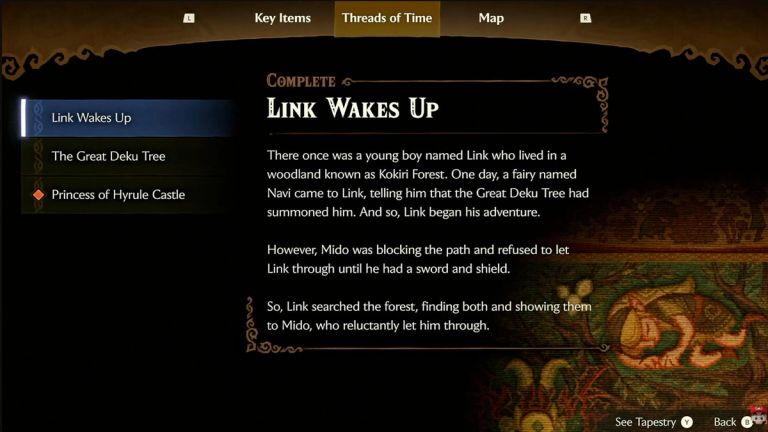
This is particularly useful for newcomers who may not already understand the relationships between locations, characters and major events. It also gives returning players a different way to appreciate the narrative. Rather than simply adding a list of objectives, Nintendo has designed the feature around a visual representation of the adventure — the result is both a navigation aid and a way of looking back at Link’s journey.
12. New bonus activities and boss rematches
The original game offered plenty of optional content, including Heart Pieces, Gold Skulltulas, minigames and side quests. The Switch 2 version adds further activities.
Hall of Fallen Foes
The Hall of Fallen Foes allows players to revisit defeated enemies and challenge bosses again. Players can examine statues representing enemies they have defeated, replay boss encounters and attempt sequences involving multiple bosses. According to Nintendo Life’s review, the feature becomes available through resting after reaching the relevant point in the story — an extra incentive to return to memorable encounters rather than limiting boss fights to a single story playthrough.
Fairy Thoughts
Nintendo has also added collectible fairy thoughts throughout Hyrule. These discoveries provide additional information and small details about the world — not a replacement for the game’s traditional collectables, but another reason to explore carefully.
Small environmental and item changes
Not every alteration is a headline feature. Reviewers have noticed minor differences in certain item locations and side activities, including the location of the Kokiri Sword chest and some of the Cucco hiding places in Kakariko Village. These small adjustments mean even experienced players cannot necessarily rely on remembering every detail from the 1998 version.
13. ZELDA NOTES adds companion-app activities
Nintendo has extended the experience beyond the console through ZELDA NOTES, available within the Nintendo Switch App on compatible smart devices. The service includes several features designed specifically for the remake.
Today’s Record tracks daily accomplishments and gameplay statistics, including enemy defeats. Gossip Quest challenges players to identify locations using hint images, rewarding points that can be exchanged for additional music scores. Play Ocarina lets players perform music on a virtual ocarina, follow guided arrangements and create custom scores to share with other players through QR codes. There is also an Ocarina of Time Quiz with more than 2,000 questions about the game.
These features are separate from the main adventure and require the relevant app and account setup — but they give enthusiastic players additional ways to engage with the game after completing the main story.
14. Hyrule’s day-and-night cycle is more consistent
The original game’s day-and-night system was an important part of Hyrule’s atmosphere. Time influenced certain events, character appearances and activities, although the passage of time behaved differently in some locations.
Nintendo has updated the system so the cycle continues more consistently, including in towns where it previously stopped. This makes the world feel less static and complements the remake’s richer lighting and environmental presentation. The change is relatively subtle compared with the new controls or visuals, but it helps the world appear more alive.
15. What has Nintendo deliberately left unchanged?
Despite all these improvements, Ocarina of Time remains a fundamentally traditional Zelda adventure — it has not been transformed into another Breath of the Wild. Players still progress through a carefully structured journey involving dungeons, items, puzzles and story-driven exploration.
Young Link and Adult Link remain central to the experience, and the familiar locations, major events and broader narrative structure are retained. Nintendo also decided against adding numerous new fast-travel points: during development, the team experimented with shortcuts but concluded that they removed too much of the experience of travelling through Hyrule.
That decision highlights the fundamental difference between a remake that modernises presentation and one that attempts to redesign the original adventure. Players looking for an enormous, freely explorable version of Hyrule may find the experience more structured than recent Zelda titles — for those who appreciate traditional dungeon progression, however, that is precisely the attraction.
16. What is missing from the Switch 2 remake?
Not every change represents an improvement. There are also some notable omissions and limitations.
No Master Quest at launch
The remake does not include the Master Quest mode found in certain earlier rereleases, including Ocarina of Time 3D. That mode offered altered dungeon arrangements and additional challenge for experienced players — its absence is particularly disappointing for returning fans hoping for a significantly harder second adventure. Nintendo has not confirmed that it will be added in a future update.
Fewer manual save slots
Nintendo Life’s review also identifies just one manual save slot per user profile, compared with the multiple in-game files offered in the Nintendo 64 original. Different console user profiles can provide separate playthroughs, but that is not as convenient as switching between several save slots inside the same game.
You cannot rename Link
The original game allowed players to choose a name for the protagonist. In the remake, Link is presented under his established name without the same custom naming option — a relatively minor restriction, but one some longtime fans will notice.
These omissions prevent the Switch 2 release from automatically replacing every previous version for every player.
17. How does the Switch 2 remake compare with Ocarina of Time 3D?
It is worth remembering that Nintendo previously revisited the game on Nintendo 3DS in 2011. That release introduced improved character models, sharper presentation, a touchscreen-based interface and various gameplay refinements — and it ran at 30fps rather than the original’s approximately 20fps.
The Switch 2 edition is a more ambitious reconstruction. Its advantages include a vastly more detailed visual presentation, 60fps performance, free camera movement, manual jumping, voiced cutscenes and a substantially reworked soundtrack. However, Ocarina of Time 3D still offers some features absent from the newest version, particularly Master Quest.
The 3DS release therefore remains an interesting alternative, especially for players who appreciate its interface, presentation and additional challenge. The Nintendo 64 original is also still available through the Nintendo 64 – Nintendo Classics library for subscribers with Nintendo Switch Online + Expansion Pack. That emulated release and the new Switch 2 remake are separate experiences, not interchangeable editions of the same software.
For more classics worth revisiting, see our list of the 20 best N64 games on Nintendo Switch.
Which version of Ocarina of Time should you play?
For most newcomers, the Switch 2 remake is the easiest version to recommend. Its modern controls, smoother performance, improved presentation and clearer navigation remove several barriers that might otherwise make a 1998 game feel unfamiliar.
For returning players, the decision is more personal. The Nintendo 64 original retains an unmistakable atmosphere, and some of its visual simplicity is part of its identity. Ocarina of Time 3D remains appealing for players who want a more traditional experience with improved presentation and the option of Master Quest.
The Switch 2 remake, meanwhile, offers the most substantial modernisation. Players who care about smooth performance, detailed environments, responsive controls and expanded story presentation will find plenty of reasons to revisit Hyrule. But those expecting major new dungeons, a substantially different narrative or a Breath of the Wild-style open world should approach it with realistic expectations — this is the original adventure rebuilt for modern hardware, not an entirely new Zelda game.
Frequently asked questions
Is Ocarina of Time on Switch 2 a remake or a remaster?
It is a full remake. Nintendo recreated the game using modern technology rather than simply upgrading the Nintendo 64 original.
Does Ocarina of Time run at 60fps on Switch 2?
Yes. Post-release technical analysis reports that the game targets and largely maintains 60fps, compared with roughly 20fps on Nintendo 64.
Can you jump manually in the remake?
Yes. Nintendo has introduced a dedicated jump button, replacing the original’s context-sensitive automatic jumping system.
Is the Water Temple different?
The fundamental dungeon remains, but Nintendo has improved equipment switching and navigation. Some structural details have also been adjusted to make the layout clearer.
Does the Switch 2 remake have new dungeons?
Nintendo has focused on preserving the original adventure. There is no confirmed additional main dungeon campaign, although the remake includes new activities and boss replay options.
Does the remake include Master Quest?
No. Master Quest is not included in the launch version, and Nintendo has not confirmed plans to add it.
Can you play the remake on the original Nintendo Switch?
No. The 2026 remake is exclusive to Nintendo Switch 2. The original Nintendo 64 game is separately available through the Nintendo Classics subscription library.
How big is Ocarina of Time on Switch 2?
Nintendo’s current UK and US listings show a download size of approximately 24.9GB. The exact required storage space may vary with updates.
Final verdict: the same masterpiece, rebuilt for a new generation
The biggest achievement of The Legend of Zelda: Ocarina of Time on Nintendo Switch 2 may be how successfully it balances modern expectations with the original game’s design. The visuals are dramatically more sophisticated, movement feels more natural, the soundtrack has received considerable attention and several of the original’s frustrations have been addressed — yet the essential journey through Hyrule remains intact.
The remake does not attempt to compete with Breath of the Wild on scale or openness. Instead, it demonstrates why the more structured approach of Ocarina of Time remains compelling nearly three decades after its debut.
There are disappointments, particularly the absence of Master Quest and the limited save system. Nevertheless, the combination of modern controls, substantially improved performance and a faithful recreation of the original adventure makes this one of the most interesting Nintendo remakes in years.
For newcomers, it provides an accessible introduction to one of gaming’s most influential adventures. For returning players, it offers the chance to rediscover a familiar world from a completely different perspective.
Explore our Ocarina of Time game hub for game information, release details and further coverage, or visit Nintendo’s official Switch 2 game page for the latest platform information.

Written by
Hannah SmithHannah Smith is a full-time gamer, foodie and Creative Writer. Spending the majority of her time sniping in the new CoD gunfight mode or wondering how the other team has more level three heroes in Dota Underlords, she's writing stories/articles and other fun things while usually getting distracted by gaming videos on Youtube.