By
In this guide
- What Is RNG in Gaming?
- How Randomness Shapes Popular Video Games
- How RNG Works in Online Casino Games
- What Does Provably Fair Mean?
- RNG vs Provably Fair: The Main Differences
- Why Independent Reviews and Licensing Still Matter
- Does Provably Fair Technology Make Gambling Safer?
- Could Provably Fair Technology Influence Traditional Video Games?
- What Should Players Look for in a Fair Randomised Game?
- Final Thoughts
- Frequently Asked Questions
Randomness plays a fundamental role in modern gaming. From the loot players discover in role-playing games to the cards dealt in digital casino games, random number generation helps create experiences that feel unpredictable.
However, not every game uses randomness in the same way. Some rely on traditional random number generators (RNGs), while certain blockchain-based games introduce systems described as provably fair.
Understanding the difference reveals how game developers balance unpredictability, transparency and player trust.
What Is RNG in Gaming?
A random number generator is a system that produces values used to determine outcomes within a game.
Most video games use pseudorandom number generators (PRNGs). These mathematical algorithms produce sequences of numbers that appear random, although they are generated through deterministic calculations.
Developers use these systems for everything from enemy behaviour to item drops.
Common examples include:
- Loot systems: Determining whether an enemy drops a rare weapon or ordinary equipment.
- Procedural generation: Creating landscapes, dungeons and environments from generated values.
- Critical hits: Calculating whether an attack deals additional damage.
- Digital card games: Shuffling decks and determining which cards appear.
- Casino-style games: Selecting outcomes for slots, roulette and other games of chance.
The important distinction is that randomness doesn't necessarily mean every possible outcome has the same probability.
Developers can assign different probabilities to different events, allowing common items to appear frequently while rare rewards remain difficult to obtain.
How Randomness Shapes Popular Video Games
Randomness is particularly important in games built around replayability.
Minecraft and procedural worlds
Minecraft uses world seeds to generate terrain and other world features. Entering the same seed under compatible generation settings can reproduce the same world.
This illustrates an important characteristic of pseudorandom generation: the results can appear unpredictable to players while remaining reproducible under defined conditions.
Diablo and loot systems
Action RPGs such as Diablo use randomised item generation to create different rewards across repeated encounters.
The uncertainty surrounding the next item drop is a major part of the gameplay loop.
However, the probability of receiving a particular reward depends on the game's underlying rules, not simply on whether a random number generator is functioning correctly.
Roguelikes and procedural challenges
Roguelikes and roguelites frequently combine procedural generation with randomised encounters, rewards and enemy placement.
This helps make successive runs feel different, even when the fundamental gameplay mechanics remain unchanged.
For developers, the challenge is ensuring that randomness creates interesting decisions rather than frustrating or unfair experiences.
How RNG Works in Online Casino Games
Online casino games also use random number generation, although their requirements differ from those of conventional video games.
In a typical RNG-based casino game, software determines an outcome according to the game's programmed rules and probability model.
For example, a digital slot game might use random values to select symbols or outcomes. Its mathematics determines the likelihood of different combinations and the associated payouts.
A properly functioning RNG does not mean a player has an equal chance of winning and losing money.
Casino games generally include a mathematical house advantage, meaning their expected returns are lower than the amounts wagered over sufficiently large numbers of plays.
This is why two separate questions matter:
- Is the outcome generated according to the stated rules?
- What do those rules mean for the player's expected return?
A game can generate outcomes correctly while still being designed to favour the operator.
What Does Provably Fair Mean?
Provably fair technology is associated particularly with cryptocurrency-based casino games.
Rather than asking players to rely entirely on an operator's assertion that a result was random, these systems can provide information allowing players to verify aspects of the outcome-generation process.
A common implementation uses cryptographic hashing and several inputs, potentially including:
- A server seed generated by the operator.
- A client seed associated with the player.
- A nonce that changes between game rounds.
- A published algorithm for calculating outcomes.
The operator may publish a cryptographic commitment to its server seed before gameplay. After the seed is revealed, a player can check whether the previously committed value matches and whether the disclosed inputs reproduce the result.
The precise implementation varies between games and platforms.
Importantly, provably fair does not mean a game offers favourable odds, guarantees winnings or independently proves that an entire casino is trustworthy.
It only provides a method of checking particular technical aspects of game outcomes, provided the system is correctly implemented and sufficient information is disclosed.
RNG vs Provably Fair: The Main Differences
| Feature | Traditional RNG | Provably fair system |
|---|---|---|
| Primary purpose | Generate game outcomes | Generate outcomes with a verification mechanism |
| Typical applications | Video games, slots and digital card games | Certain cryptocurrency casino games |
| Player verification | Usually limited | May allow independent outcome checks |
| Cryptographic components | Not always required | Commonly uses hashes and seeds |
| Guarantees favourable odds | No | No |
| Guarantees operator safety | No | No |
These technologies are not necessarily alternatives. A provably fair system may itself use pseudorandom processes and cryptographic techniques.
The meaningful distinction is the extent to which a player can verify the process used to produce an outcome.
Why Independent Reviews and Licensing Still Matter
Technical transparency is only one consideration when evaluating a gaming platform.
A platform might provide a functioning outcome-verification system while still presenting risks involving withdrawals, account restrictions, data security or customer support.
For that reason, players researching casino platforms should distinguish between the fairness of individual game outcomes and the wider reliability of the operator.
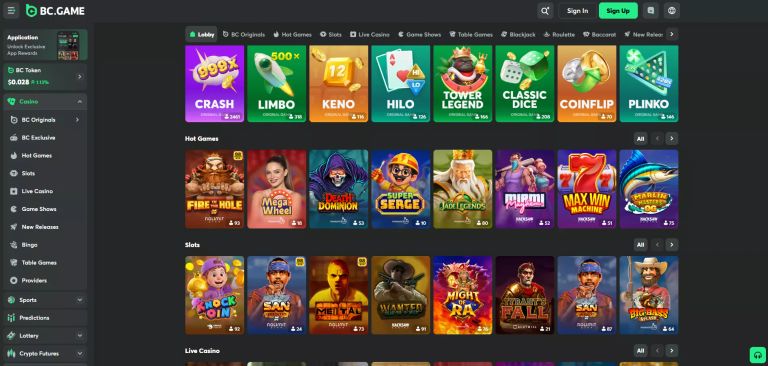
Independent comparison sites sometimes examine these issues in detail. For example, the BC.Game review published by CryptoManiaks discusses the platform's games, security features, licensing and verification systems.
Such reviews are useful starting points for research, but their assessments should not replace independent checks of regulatory status, withdrawal conditions and the platform’s terms.
This is especially important when cryptocurrency is involved.
Unlike conventional payment methods, cryptocurrency transfers can be difficult or impossible to reverse, and the value of an asset may change substantially between deposit and withdrawal.
Players should also verify that an operator is authorised to serve customers in their jurisdiction. For Great Britain, the UK Gambling Commission provides regulatory information and a public register of licensed operators.
Does Provably Fair Technology Make Gambling Safer?
Not necessarily.
Provably fair technology can improve transparency around how certain outcomes are generated. It does not address every risk associated with gambling.
It cannot guarantee that an operator will process withdrawals promptly, protect customer funds or resolve disputes fairly.
Nor does it eliminate the possibility of financial harm.
The UK Gambling Commission has identified cryptocurrency-related payment methods as presenting additional financial crime and consumer protection challenges.
For players, this means technical verification should be treated as one consideration among several rather than proof of overall safety.
Could Provably Fair Technology Influence Traditional Video Games?
Cryptographic verification has potential applications beyond gambling.
Competitive games, digital collectibles and online marketplaces could theoretically use similar mechanisms to demonstrate that particular random outcomes were not changed after an event.
For example, a game developer might publish a cryptographic commitment before a randomised reward is generated, then reveal the information required to reproduce the result.
However, implementing such systems introduces complexity.
Developers must consider whether revealing seeds or algorithms could allow players to predict future results, manipulate game systems or gain unintended advantages.
For most conventional video games, established pseudorandom generation remains sufficient.
The greater opportunity for cryptographic verification may be in environments where independently checking an outcome provides meaningful value to players.
What Should Players Look for in a Fair Randomised Game?
Whether playing a conventional video game or examining an online platform that uses financial wagers, understanding how randomness works can help players make more informed decisions.
Useful questions include:
- Are the rules and probabilities explained clearly?
- Can important claims about random outcomes be independently checked?
- Does the platform explain how its verification system works?
- Are security, privacy and account restrictions transparent?
- Is the operator subject to appropriate regulatory oversight where required?
These questions help distinguish technical claims from meaningful evidence.
Final Thoughts
Randomness is one of gaming's most versatile technologies.
It can make an adventure unpredictable, create entirely new worlds or determine the outcome of a digital card game.
Traditional RNG systems provide the foundation for many of these experiences, while provably fair systems introduce additional ways to verify certain outcomes.
Neither approach automatically makes a game enjoyable, financially favourable or safe.
As gaming technology evolves, transparency may become increasingly important. But understanding the mathematics, the rules and the limits of verification remains just as valuable as the technology itself.
Frequently Asked Questions
Is RNG genuinely random?
Most software-based random number generators are pseudorandom. They use algorithms to produce sequences that appear random. Some systems also incorporate hardware-generated entropy or other unpredictable inputs.
Can RNG be manipulated?
Game developers control the rules and probability models used by their games. Poor implementation or deliberate interference can compromise the integrity of random outcomes. Independent testing and appropriate oversight can help identify problems.
Is provably fair better than RNG?
They serve different purposes. RNG generates outcomes, while provably fair mechanisms can allow certain outcomes to be verified. A provably fair system may also rely on pseudorandom generation.
Does provably fair mean a casino is safe?
No. It does not guarantee reliable withdrawals, strong consumer protections, appropriate licensing or favourable odds.
Can provably fair technology be used in video games?
Yes, in principle. Cryptographic commitments and verification mechanisms could be used for randomised rewards, competitions and other systems where independently checking results would be valuable.

Written by
Jessica ThompsonAs a dedicated gaming journalist with over five years of experience, I've immersed myself in the ever-evolving world of video games. Currently, I contribute to Gamerbolt.com and PS6news.com, where I cover the latest in gaming news, in-depth game reviews, and industry trends. At Gamerbolt.com, I've had the privilege of shaping content strategies, writing comprehensive articles, and engaging with a passionate community of gamers. My role involves not only crafting engaging narratives but also staying ahead of the curve with the latest gaming innovations and upcoming titles.