


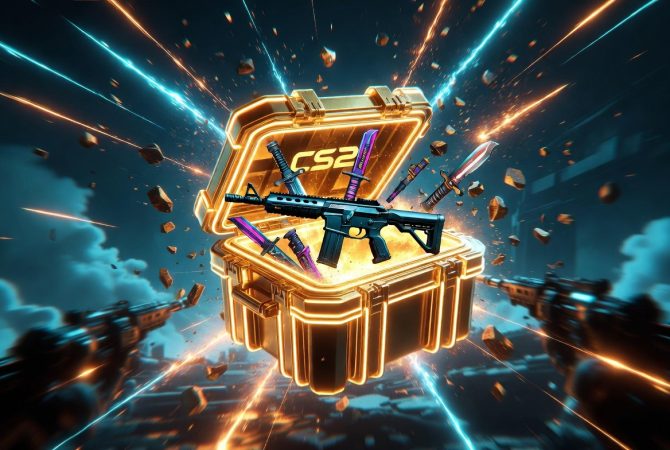

Counter-Strike represents one of the most popular tactical first-person shooting games of all time. Users are provided with a maelstrom of powerful weapons. Countless environments are available. Teamwork is normally a necessity. Tactics trump blind luck, or so-called “bullet hell” platforms. In other words, Counter-Strike has come to define what iGaming is all about.
While this is certainly an adrenaline-packed franchise, we also need to remember that specific in-game elements provide just as much appeal as the action itself. Anyone who is at least vaguely familiar with Counter-Strike is likely aware of the role that loot boxes play. Why have these come to represent such sought-after experiences? The best way to understand the allure of Counter-Strike case drops is to delve into a bit of psychology.
Levelling the Playing Field
Perhaps the main reason why Counter-Strike fans often flock to a case opening event involves the random nature of the mechanics. Unlike some types of rewards that are based on skill or XP, the items contained within a case are entirely independent of the player. Some cases might offer up generic skins while others could boast highly sought-after items. In other words, case openings are entirely democratic in nature. This is a great way to attract new players, and to keep existing competitors coming back for more.
Real-World Value
Another interesting feature of Counter-Strike cases is associated with how their value can translate beyond the game itself. Some of the most valuable items can fetch nearly astronomical real-world prices. For instance, the Case-Hardened Blue Gem AK-47 can sell for well over $30,000. The Doppler Sapphire butterfly knife has been known to previously sell for upwards of $20,000. Readers might also be shocked to learn that a factory-new Case-Hardened Blue Gem Karambit knife may be valued at over $2.5 million. These figures are all associated with the rarity of the item in question. So, Counter-Strike also doubles as a real-world marketplace for those who wish to obtain valuable loadouts, or to sell unwanted items for a considerable profit.

Virtual Clout
Reputation goes a long way within the Counter-Strike community. This was actually one of the features which served to define the franchise at an early stage. Creators realised that social gaming represented the wave of the future, so providing players with a means to interact with one another would obviously increase overall engagement rates. However, a side benefit here is that Counter-Strike skins have now come to represent virtual status symbols. They demonstrate the skill of a player, and they demand respect. This concept has sometimes been referred to as “flex” throughout the Counter-Strike gaming ecosystem.
Not only can opening Counter-Strike cases be a great deal of fun, but no one is really certain what the next loot box has to offer. While the chances of scoring a high-end item worth a significant amount of money may not be high, this is part of the overall appeal, and an in-game element that has not been lost on the average player.
