

In this guide
- Understanding player-hosted environments and server types
- Why players are choosing hosted servers today
- How customizable servers change gameplay dynamics
- The critical technical and social considerations for hosts
- Genres and communities most shaped by hosting trends
- The future multiplayer landscape shaped by server hosting
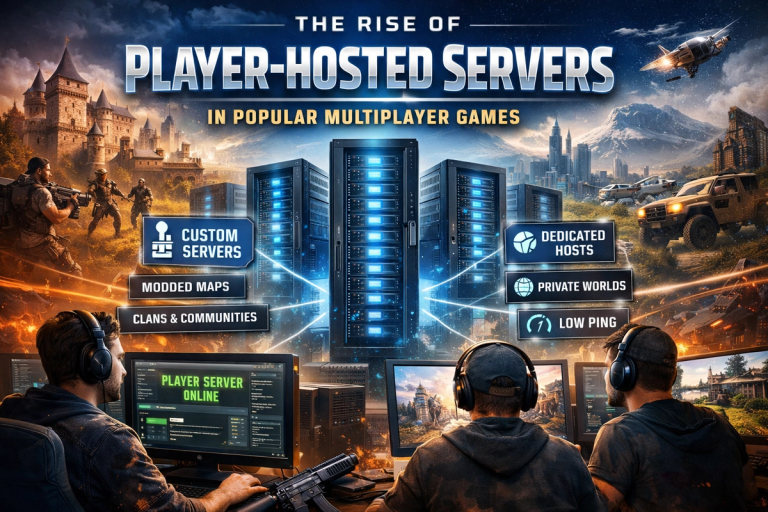
More multiplayer gamers now seek player-hosted servers over official matchmaking, shifting how communities interact and play together. This trend allows players to shape their experiences, maintain persistent worlds, and set unique rulesets. Understanding why server hosting is growing highlights how multiplayer gaming is evolving.
When you join a multiplayer game, you might first think of standard matchmaking, but the emergence of player-hosted servers is transforming online play, including options like a minecraft server by G-Portal. With shifting community needs, improved technological accessibility, and a desire for tailored experiences, more players are moving away from publisher-controlled environments in favor of the autonomy that hosting offers. This applies across genres, especially in sandbox and co-op spaces, allowing for detailed custom environments and private social circles. Many find that player-hosted options provide control and creativity that mainstream lobbies rarely deliver.
Understanding player-hosted environments and server types
Player-hosted servers refer to any game server instance managed, configured, or moderated by users rather than the official publisher. These servers come in various forms, such as dedicated servers, which are typically always online and run independently, or rented servers provided by third-party hosts. Community realms, managed by a group of friends, also fall into this category, though they may be smaller in scale.
Unlike official matchmaking, where settings and policies remain fixed, player-hosted servers allow you to define crucial aspects of the gameplay environment. Control over access permissions, gameplay rules, and mods means you can customize the server to fit your group’s interests. This shifts control to users, changing the power dynamic between players and game publishers.
These arrangements often appeal to those seeking deeper or more personalized experiences. Whether you want to establish persistent survival worlds, experiment with new features, or simply moderate your own community, hosting a server provides the platform needed. As player-managed environments gain traction, interest continues to grow among developers and communities.
This development can influence the landscape of many popular titles and encourages communities to create their own standards for play and moderation.
Why players are choosing hosted servers today
The desire for greater control drives much of the popularity behind player-hosted servers. You have the option to adjust elements like difficulty, item progression, or the in-game economy, supporting playstyles not always possible in the base game. Many server hosts also implement mods or plugins, tailoring gameplay and offering unique variations unavailable on official servers.
Server persistence is another major draw. Player-hosted worlds can continue for months or even years, allowing communities to develop long-term projects and shared histories. Large builds, ongoing narratives, and established social hierarchies all become possible in a persistent server environment.
Ownership over rules and culture lets you decide who joins, what behaviors are acceptable, and which kind of play is encouraged. Rather than facing the risks of random matchmaking, many prefer community-moderated spaces that encourage a more respectful and collaborative atmosphere. This approach helps reduce conflict among players with different expectations.
Because of these motivations, many note that server hosting supports creativity and governance that open matchmaking rarely allows. It puts more decisions into the hands of those running the server.
How customizable servers change gameplay dynamics
With enhanced control, emergent playstyles and community-driven events can develop that are rare in official lobbies. Player-hosted servers often serve as incubators for creative projects, spontaneous roleplay, and unique social rules. Extensive world-building and story-driven content can thrive when the environment is both flexible and persistent.
Custom game modes and quality-of-life improvements can make gameplay smoother and more engaging. Features like adjustable spawn rates, improved user interfaces, and custom minigames enable you to shape your own multiplayer landscape. Sometimes, communities introduce their own updates through server configurations, without waiting for official changes.
As server hosts make rapid adjustments to their environments, you may experience ongoing experimentation that can outpace traditional development cycles. If a change does not work, server operators can quickly revert, keeping the community engaged and gameplay fresh.
This flexibility, compared to static official servers, encourages innovation and strengthens a server’s reputation for uniqueness. It also encourages players to take a more active role in their community’s development.
The critical technical and social considerations for hosts
Running your own server presents technical challenges, with stability and performance remaining most important. Factors such as hardware capabilities, internet bandwidth, and efficient configuration determine uptime and overall gameplay quality. Large player counts and advanced mods add extra demand, requiring efficient resource management for consistent performance.
Latency is a decisive factor because server location affects how responsive the game is for all players. Choosing the right region can reduce input lag and create a more consistent experience for distant friends. Careful selection and setup improve playability and help retain players over time.
Server management goes beyond technical skills into the realm of community moderation. You are responsible for using tools like whitelists, permissions, and automated anti-grief systems to maintain order. Balancing administrative authority with transparent rule enforcement creates a fair environment as new players join and group dynamics shift.
Handling disputes, cheating, and behavioral issues is essential for fostering a stable gaming environment. Proactive intervention and clear communication can help make your server a trusted space for cooperation and friendly competition, building loyalty among members.
Genres and communities most shaped by hosting trends
Certain game genres feel a greater impact from player-hosted servers, especially those emphasizing persistent worlds and social structures. Survival games benefit from long-term worlds where building, resource management, and alliances persist from session to session. Continuity supports group cohesion and enables more ambitious group projects.
Sandbox games, which emphasize creativity and freedom, flourish in hosted server environments. Mod support and the ability to alter mechanics unlock experiments from collaborative builds to inventive new rule sets. In co-op games, carefully chosen groups can craft specialized adventures, focusing on trust and teamwork instead of random matchmaking.
Player-governed environments appeal to those who prefer to set their own norms and social contracts. Curating culture, setting boundaries, and developing traditions are key reasons some communities choose independently hosted solutions. These choices depend on the specific tools and options each game provides.
As long as these features remain attractive, player-hosted servers are likely to continue defining community-led multiplayer play. They may also influence how some developers approach flexibility and moderation in their titles.
The future multiplayer landscape shaped by server hosting
The widespread adoption of player-hosted servers signals a lasting change in online multiplayer gaming. Instead of a single, standardized matchmaking system, there is now a patchwork of communities and environments, each tailored to specific audiences. This diversity enables many playstyles and offers alternatives to uniform systems.
Player-hosted environments may also influence developers’ thinking about moderation, customization, and community management. Some developers may offer more administrative tools, while others keep tighter controls, depending on each game’s design. The balance between official hosting and community hosting will vary by title.
Even as their popularity grows, player-hosted servers depend on responsible moderation and technical reliability. Communities that manage these aspects create durable spaces for social play, ensuring hosted servers remain a significant part of the multiplayer landscape.
As of Monday, April 20, 2026, interest in control, persistence, and customization continues to shape how many players approach online multiplayer. These preferences help player-hosted servers maintain their relevance across different game communities.

Written by
Jessica ThompsonAs a dedicated gaming journalist with over five years of experience, I've immersed myself in the ever-evolving world of video games. Currently, I contribute to Gamerbolt.com and PS6news.com, where I cover the latest in gaming news, in-depth game reviews, and industry trends. At Gamerbolt.com, I've had the privilege of shaping content strategies, writing comprehensive articles, and engaging with a passionate community of gamers. My role involves not only crafting engaging narratives but also staying ahead of the curve with the latest gaming innovations and upcoming titles.