


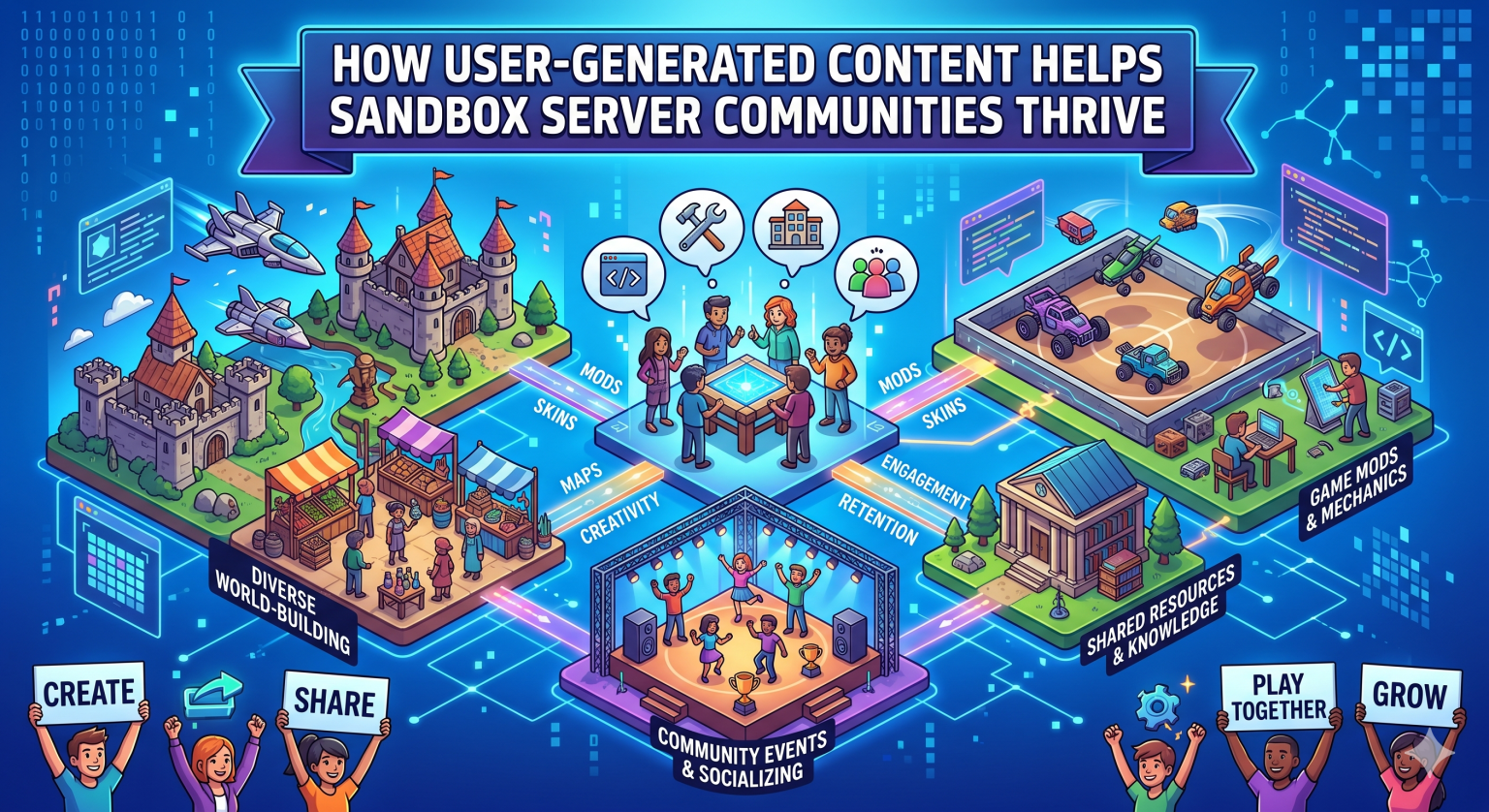

Sandbox games remain vibrant long after release when players shape their own digital worlds. Community-made creations are essential for long-term activity and continual engagement across multiplayer servers. As players seek new experiences, user-generated content is crucial for sandbox communities to develop and succeed over time.
At the core of any thriving sandbox server is a diverse set of tools and content generated by its community. The relevance of user-generated content goes well beyond cosmetic customization; it shapes the social environment and gameplay possibilities for players. You can see this in the popularity and activity on any leading multiplayer sandbox environment, especially when minecraft server by G-Portal enables contributors to extend the life of worlds through custom maps, plugins, and more. Understanding the mechanics and influence of player-driven content helps explain why some communities stay active for years, while others decline as official updates slow down.
What qualifies as user-generated content in these settings
User-generated content in sandbox servers includes a wide range of creative work contributed by the community. Whether you are designing complex structures, building custom maps with detailed objectives, or introducing original mini-games, the potential to create is extensive for active players.
Custom plugins, mods, and server-specific rulesets are important aspects of many servers. Through these modifications, you help customize gameplay experiences, from advanced roleplay systems to difficult survival mechanics, often changing the game beyond its starting format.
Distinctive builds and imaginative landscapes constructed by players add to the character of a server. Over time, these builds become known locations and community centers for events, supporting longer player involvement.
Many sandbox servers also allow you to influence the underlying mechanics with voting systems, collaborative projects, or the creation of lasting social spaces. These features regularly contribute to a sense of ownership and belonging for members.
User-generated content powers a thriving community cycle
New content from community members attracts both new and returning players. When you join an established sandbox server, exploring new creations, whether it is a unique minigame or an immersive narrative structure, is engaging and can help turn visitors into regular contributors.
This often results in a self-reinforcing cycle. New players, inspired by what others have created, begin to add their own work, expanding the variety of available activities and spaces. Over time, servers become ongoing destinations rather than single-visit experiences.
Player-driven updates fill the gap left by infrequent official updates, providing continuing reasons to participate. Events, seasonal challenges, and collaborative builds help keep the world feeling dynamic, led by players rather than relying solely on developers for new activities.
Even as the core gameplay stays the same, frequent content updates and changing worlds help ensure that you will find something novel each time you join. In many situations, minecraft server by G-Portal supports these developments by providing continuity and technical capacity to the community.
How server identity and events shape retention
Distinct server identities emerge as user-generated content and ongoing social activities combine over time. Seasonal events, rotating worlds, and themed content updates make each server unique, encouraging you to return and participate in future activities.
Roleplay servers, for instance, regularly produce story arcs and interactive quests developed by you and other players. Such features offer more depth and engagement than standard multiplayer setups, building relationships and traditions special to each server.
Sustained participation is also encouraged by well-organized seasons. These fixed-time frameworks promote peaks of activity, incorporating leaderboards, rewards, or world resets at season’s end, motivating both creators and players to stay involved at every stage.
Frequently updated content gives former players a reason to revisit established servers. For many, the ongoing development and creative changes from community input can be more appealing than waiting for official updates, helping to build long-term loyalty and cohesion.
Managing challenges from fragmented versions and moderation
Although user-generated content has clear advantages, there are challenges that can complicate smooth server operations. An expanding range of mods and plugins often leads to version fragmentation, as not all users update tools at the same rate or use the same resources.
Compatibility problems among plugins and assets may produce bugs or instability. Server administrators often need to invest time in testing new content and keeping essential systems current to avoid gameplay interruptions.
Quality control is a continual challenge. Not every user submission can be implemented, and without clear guidelines, a server can become disorganized or inconsistent. Community moderation teams must review submissions and uphold the server’s expectations for both creativity and behavior.
The moderation workload frequently grows with the community, making strong governance frameworks and clear decisions essential to maintaining an inclusive, safe, and productive space for all contributors.
Tools, governance, and technical needs for sustainable growth
Effective permission systems and anti-griefing tools are vital in protecting creations and ensuring order. Reliable technical solutions help administrators balance creative freedom with the protection of personal and collective achievements.
Recognition for creators is becoming more standard, supporting trust and accountability with each new addition. Such measures encourage continued contributions and reduce disputes over ownership of content.
A stable technical base is necessary for managing user-generated content at scale. As you introduce new builds, maps, and plugins, demands on storage, server performance, and consistent uptime grow; reliable backup systems and the ability to reverse problematic updates are key to keeping experiments and the server itself secure.
As creative tools and pathways become easier over time, participation rises. This supports more teamwork, a greater range of creators, and a server culture that prizes innovation and teamwork.
Social dynamics underpin long-term community cohesion
In active sandbox servers, creators earn recognition and status not just for technical skill but for producing enjoyable experiences that benefit the group. Featuring builds or offering credits helps motivate participants to keep supporting the community’s ongoing activity.
Collaboration is essential on many successful servers. Group projects, shared events, and co-created builds create a social dynamic where your input helps shape the ongoing story of a virtual world.
Community standards and shared guidelines naturally evolve as members decide what types of content work best. Over time, you develop a collective sense of quality, refining which creations make the strongest impact and endure among the group.
This environment of respectful creativity and support strengthens individual relationships while also helping to secure steady growth and daily stability in successful sandbox communities.
