


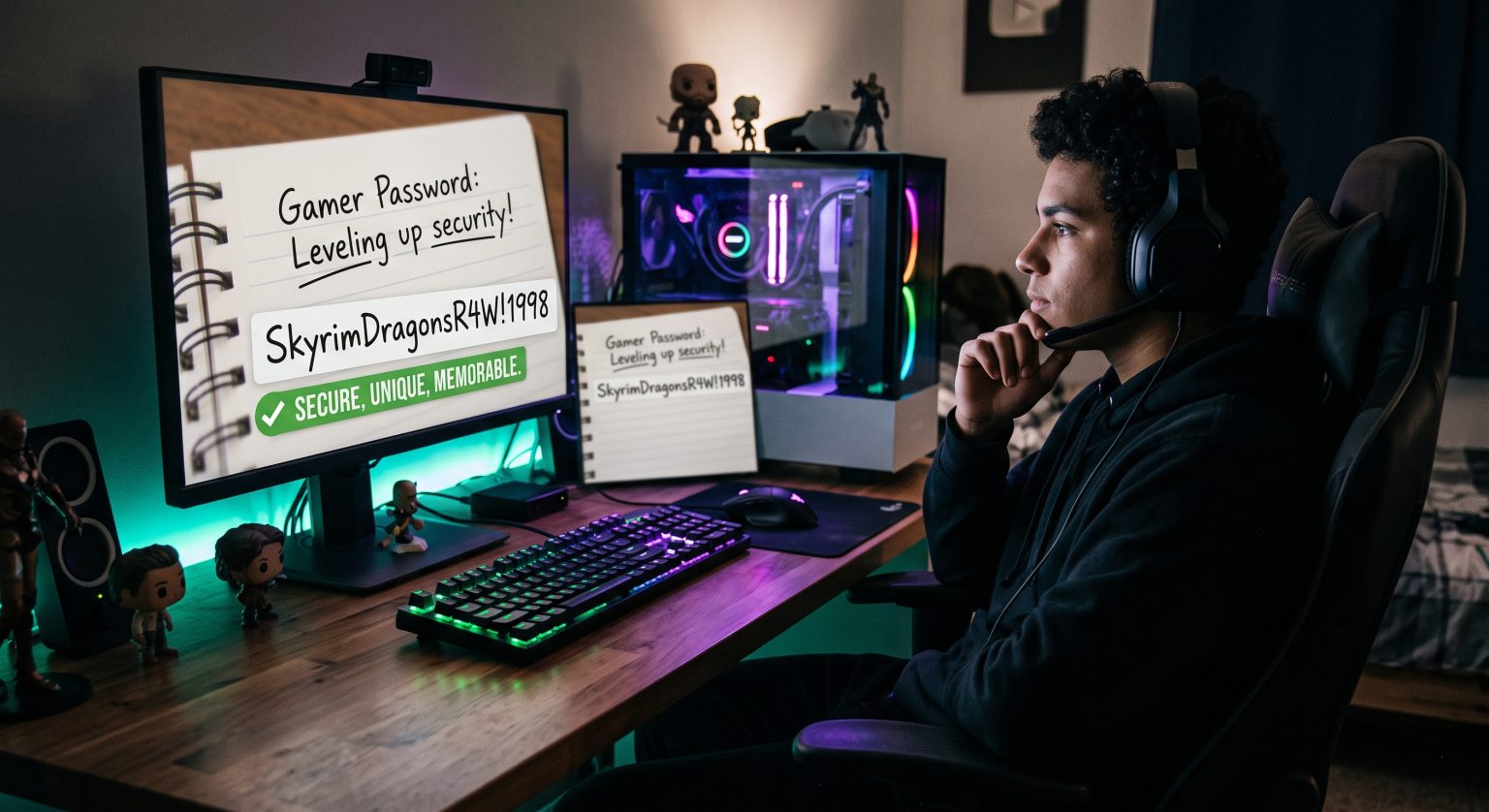

A GamerBolt piece from a while back told the story of a small streamer whose account got hacked mid-broadcast, losing access to Twitter, Twitch, and PayPal within minutes, which then cascaded into his home address and email being exposed too. He spent the rest of his evening on the phone with support teams instead of finishing his stream, and the whole thing started with one weak link somewhere in his account setup.
That kind of cascade happens because accounts are connected in ways we don’t usually think about. Your email resets your Twitch password. Your Twitch account is tied to Discord. Discord might be linked to Steam. If one of those runs on a password you’ve reused elsewhere, a single leak anywhere in that chain can unravel the lot. A password generator exists specifically to break that chain, by producing a completely random, unique string for every account instead of a version of the one you’ve been using since your first Hotmail address.
Why streamers and gamers get targeted specifically
Livestreamers and competitive gamers are unusually attractive targets. A hacked stream is public, embarrassing, and disruptive in a way a hacked email inbox usually isn’t, which makes account takeovers a genuinely appealing move for attackers looking for attention or leverage. On top of that, gaming accounts often sit connected to payment details, years of purchases, and a public identity that’s worth something to protect.
The entry point is rarely sophisticated. It’s usually a reused password, picked up from an unrelated breach and tried against your other accounts on the off chance it still works.
Common habits that make this easier than it should be
- Reusing a password (or a close variant) across email, Twitch, Discord, and Steam.
- Basing it on a gamertag, favourite game, or something public in your bio.
- Skipping two-step verification because it adds an extra tap at login.
- Never rotating a password after hearing about a breach on a service you use.
- Keeping a text file of logins on the same device you stream from.
None of these are unusual, they’re just the exact pattern credential-stuffing tools are built to exploit.
What actually changes once every account is unique
Once each account runs on its own randomly generated password, a breach on one platform stops being a threat to the rest of your setup. Instead of frantically checking which of your accounts might share the exposed password, you deal with exactly one, and the rest stay untouched. That’s the difference between a stressful ten minutes and losing an entire weekend of content and trust with your audience.
It also removes the temptation to reuse a “good enough” password on smaller accounts, the kind that quietly ends up protecting something that actually matters once you link it to your email or payment details.
A baseline worth following either way
The UK’s National Cyber Security Centre lists account protection as one of the core steps for gamers, specifically recommending a strong password that isn’t reused elsewhere, alongside two-step verification wherever it’s offered. That advice holds regardless of whether you’re gaming casually or streaming to an audience, since the account itself is the actual target either way.
Start with your email, your main platform, and anything tied to payments or your streaming setup. Everything else can follow as you log back into it. It’s a small habit that costs a few seconds per account and saves you the kind of evening that streamer never got back.
The convenience side nobody mentions
Security advice tends to focus on the risk, but the practical appeal of a generator is honestly just how little effort it takes. Instead of trying to invent something memorable every time you sign up for a new game launcher, marketplace, or Discord bot dashboard, the tool spits out a long random string in a couple of seconds and autofills it the next time you log back in. There’s nothing left to memorise beyond the single master password protecting the vault.
That matters because most reused passwords aren’t a result of laziness so much as genuine difficulty. Coming up with a fresh, strong, memorable password every single time you create an account is hard, and most people quietly give up on doing it properly after the fifth or sixth account. Removing that friction is what actually changes the habit long term, rather than just adding another thing to feel guilty about ignoring.
