


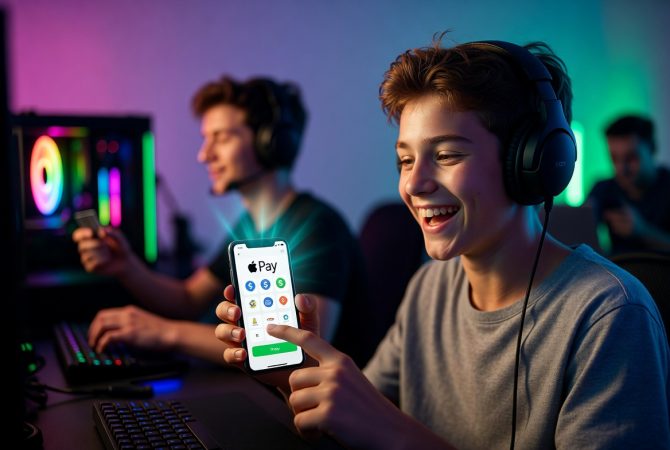

Buying games online used to be annoying if you did not have a credit card.
You could still do it, but it took extra steps. Maybe you bought a gift card from a shop. Maybe you used a prepaid code. Maybe you asked someone else to pay, then gave them cash later. Most players found a way, but it was not exactly smooth.
It was worse when timing mattered. A Steam sale was about to end. A mobile game had a cheap bundle for one day. A console store had a skin you actually wanted, but your payment option was not ready.
Mobile wallets made that less of a headache. You could add money on your phone, pay inside the store, and move on with your night.
Game Shops Had to Move Past Credit Cards
Credit cards were never a perfect fit for gaming.
Lots of younger players do not have one. Plenty of adults do not like using one for game shops either. In some countries, people are simply more used to wallets, bank transfers, cash-in stores, or phone payments than cards.
So the problem was not always the game. The game was there. The shop was there. The player wanted to buy. The payment step was the part that got in the way.
That is where mobile wallets made a real difference.
A player could top up through a bank, kiosk, transfer, card, or local shop partner. Then they could use that balance for a game, battle pass, skin, subscription, or small in-app purchase.
No hunting for the right gift card. No typing long card details. No asking a friend or parent to help every time.
It feels normal now because people already pay this way for food, bills, shopping, transport, and phone load. Gaming just followed the same habit.
The Philippines Shows Why Wallets Matter
The Philippines is one of the clearest examples.
It has a young gaming crowd, a huge mobile audience, and many players who are comfortable paying through apps. A recent market report put the country’s gaming player base at 67.7 million in 2024, with almost 60% market reach.
That same report found that players aged 18 to 34 make up 69% of the market. This matters because that age group already lives inside phone apps. They chat there, shop there, watch there, and pay there.
Digital wallets also lead gaming payments in the country, used by 39% of players. That puts wallets ahead of cash and traditional bank payments for gaming spend.
So when a game wants Filipino players, it cannot treat cards as the only real option. Local wallets are part of the gaming setup now.
PayMaya, now known as Maya, became important because it gave players another route into digital stores.
Maya has supported direct purchases across stores like Steam, Google Play, the App Store, and PlayStation Network. That helped players buy games and in-app content without needing to go out and buy codes first.
The same payment habit moved into online casinos, too.
Casino players usually want payment methods that feel familiar, fast, and easy to track. That is why e-wallets are common at casino sites. They can sit between the player’s main bank account and the casino cashier, which makes deposits feel cleaner.
Different markets lean toward different wallets. The Philippines is a good example because local players already use wallet apps for shopping, bills, QR payments, transfers, and game purchases. PayMaya, now Maya, is one of the better-known names in that space.
That is why some casino comparison pages now focus on local wallet support. We even found a collection of PayMaya casinos from CasinoBankingMethods for players who want casino sites that support PayMaya for deposits or withdrawals.
In-Game Purchases Became More Normal
Mobile wallets did not just make full game purchases easier.
They also made smaller in-game purchases feel smoother. That includes battle passes, character skins, loot boxes, energy packs, coins, card packs, weapon cosmetics, and season bundles.
This can be good or bad, depending on how clear the shop is.
The good side is access. Players without credit cards can still buy the same content as everyone else. A wallet can also help players set a rough budget, because they can load only what they are willing to spend.
The bad side is friction. When paying gets easier, impulse buying gets easier too. That is where players need to slow down.
A wallet should make payment simple. It should not make every bright shop button feel harmless.
Wallets Reduced the Need for Game Cards
Game cards are still useful, but they are no longer the only workaround.
Before wallets became common, many players relied on prepaid cards from shops. That worked, but it had clear problems. You had to find the right card, buy the right amount, scratch the code, type it in, and hope the region matched your account.
That was not fun when a sale was about to end.
Wallets made the process less clunky. A player could load money, open the store, and buy directly. No scratch cards. No wrong code. No waiting for someone else to lend a card.
This helped PC, console, and mobile players. It also helped free-to-play games, where the whole business depends on small and fast purchases.
A player who cannot pay easily will not buy the skin. A player who can use a wallet might.
The Best Wallet Setup Gives Players Control
A good wallet payment setup should do more than move money.
It should help players see what they spend. That means clear transaction history, instant alerts, spending limits, easy balance checks, and quick ways to freeze or block a card.
That is useful for gaming because small purchases add up fast.
One battle pass may be cheap. A few skins, a currency pack, and a limited bundle can turn into a bigger spend before the player notices. A wallet history makes that easier to spot.
Parents can also use wallets more carefully than full credit cards. They can load a fixed amount for a child, keep the main card away from the game account, and avoid surprise bills later.
That does not replace parental controls, but it helps.
Players Still Need to Read the Shop Rules
A better payment method does not fix a messy game shop.
Players should still check what they are buying before they pay. Is the item permanent? Does the pass expire? Can the currency be refunded? Does the purchase work across platforms? Can the account be banned or locked?
This matters even more with random rewards.
If a game sells loot boxes, card packs, prize wheels, or mystery skins, check the odds first. If the game hides the odds or makes them hard to read, that is not a good sign.
Wallets make payment easier, but they should not make players careless.
