
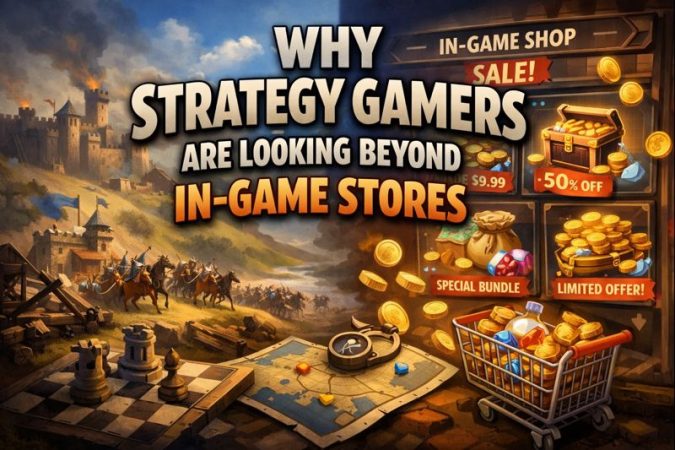

Strategy gamers don’t buy on impulse. They plan, calculate, and optimize every decision, from early-game builds to late-game upgrades. But in-game stores often push the opposite mindset: limited-time bundles, unclear value, and pressure to spend fast. That mismatch is driving players to rethink where and how they buy.
Instead of trusting the first offer that pops up, more strategy players compare pricing, research value, and look for purchase options that better match their pacing. The shift isn’t about spending less. It’s about spending smarter, with control over timing, value, and long-term progression.
Strategy Players Treat Spending Like a Build Decision
Strategy players judge purchases by outcomes, not excitement. They ask what a bundle actually changes: faster construction, stronger units, or better long-term efficiency. A pile of game credits means nothing if it doesn’t translate into measurable progress. If the benefit can’t be measured, it doesn’t earn a spot in their plan.
They also think in terms of opportunity cost. Spending on short boosts can delay permanent advantages like production upgrades, queue expansions, or progression tools that keep paying off. A good purchase compounds. A bad one just disappears after the timer ends.
That’s why “discounts” rarely convince them on their own. They want clear pricing, predictable value, and a way to compare options across timing windows, events, and progression stages. Ambiguity breaks trust fast.
When the in-game store makes value hard to verify, many players compare alternatives like LDShop to keep spending aligned with pacing, efficiency, and long-term growth. That comparison becomes even more common during event cycles, when timing matters and players want control over how they stock up without getting boxed into a single store’s bundle structure.
Community Meta Culture Makes Pricing Easier to See Through
Strategy communities break down store offers the same way they break down metas. Players don’t just ask whether a bundle looks good. They calculate what it delivers per dollar, how long the boost actually lasts, and whether it changes progression in a meaningful way.
That analysis spreads fast because strategy games attract planners. Discord servers, subreddits, and alliance chats turn into informal review boards where someone always tracks which offers deliver real value and which ones hide weak returns behind flashy labels.
Once players see that data, marketing loses power. “Best value” tags stop working when the community can prove that another bundle gives more resources per purchase, or that the same offer returns every two weeks.
This shared knowledge pushes players to compare options beyond the default store. Instead of buying blindly, they follow what the numbers say. That mindset naturally leads them to explore alternatives.
Competitive Events Turn Spending Into a Math Problem
Leaderboards and limited-time events don’t just reward skill. They reward conversion efficiency. Players quickly learn that placing well often depends on stacking speed-ups, stamina, and resource packs at the right moment, not simply playing better.
That creates an arms-race effect. One purchase becomes the baseline, then the baseline escalates as others spend too. The result is less “optional support” and more “cost of staying relevant,” especially in long-running strategy titles where alliances compete season after season.
Once spending becomes tied to predictable event cycles, players change how they buy. Instead of making an impulse purchase when a pop-up appears, they plan purchases around value windows, stock-up moments, and long-term progression needs. That shift naturally pushes them to compare purchasing options beyond the default in-game store.
Platform Fees and Regional Pricing Gaps Push Players to Compare Options
In strategy games, small price differences add up fast because progression is cumulative. Players may buy multiple times across a month—during events, upgrades, and seasonal campaigns—so even minor pricing gaps become noticeable.
Those gaps come from structural factors that players can’t ignore. Platform fees affect what developers charge. Currency conversion changes the real cost. Regional pricing differs by country. The result is a strange reality where two players can buy the “same” currency pack and receive the same items, but pay very different amounts.
Strategy gamers notice because they compare everything. Once they realize pricing isn’t consistent, they start treating purchases like any other optimization problem. They look for clearer value, better alignment with their budget, and fewer hidden costs baked into the store price.
Trust Is the Real Reason Players Walk Away From Default Stores
When pricing looks inconsistent, trust drops quickly. Strategy gamers don’t oppose monetization, but they expect the same transparency they demand from game systems. If a store hides value behind confusing bonus math, inflated “original prices,” or bundles that mask weak returns, players start to read it as manipulation.
That matters more in strategy titles because the investment runs long-term. Accounts take months or years to build. A store that creates uncertainty makes players question every purchase, even when they want to support the game.
Once doubt sets in, buying habits shift. Players study community breakdowns, ignore impulse bundles, and compare purchase routes that offer clearer value. The move beyond in-game stores often begins here. Price matters, but trust decides where the money goes.
To earn that trust, stores need to make value easy to verify. Clear pricing, consistent pack structures, honest comparisons, and fewer pressure mechanics signal respect for the player’s decision-making. When monetization aligns with strategy thinking, players stop treating the store as a trap and start treating it as part of the game’s ecosystem.
What Buying Smarter Looks Like for Strategy Gamers
Spending becomes more effective when it supports long-term progression instead of short bursts of power. Strategy players get better results when they treat purchases as part of planning, not as reactions to pop-ups or event pressure.
- Compare value per unit, not bundle headlines
- Set a monthly budget cap and stick to it
- Avoid buying mid-event unless it changes outcomes
- Prioritize permanent upgrades over temporary boosts
- Track recurring offers and known store cycles
- Use community breakdowns to verify value claims
Wrapping Up
Strategy gamers still spend, but they spend with intent. They support games that respect planning, transparency, and long-term investment instead of relying on pressure mechanics and confusing pricing.
As players get better at value analysis, the default in-game store loses its advantage. Pop-ups and timers can’t compete with informed buyers who compare outcomes, verify pricing, and follow community data. Developers who want loyal spenders should build trust first. When the store earns that trust, strategy players have no problem buying.
