


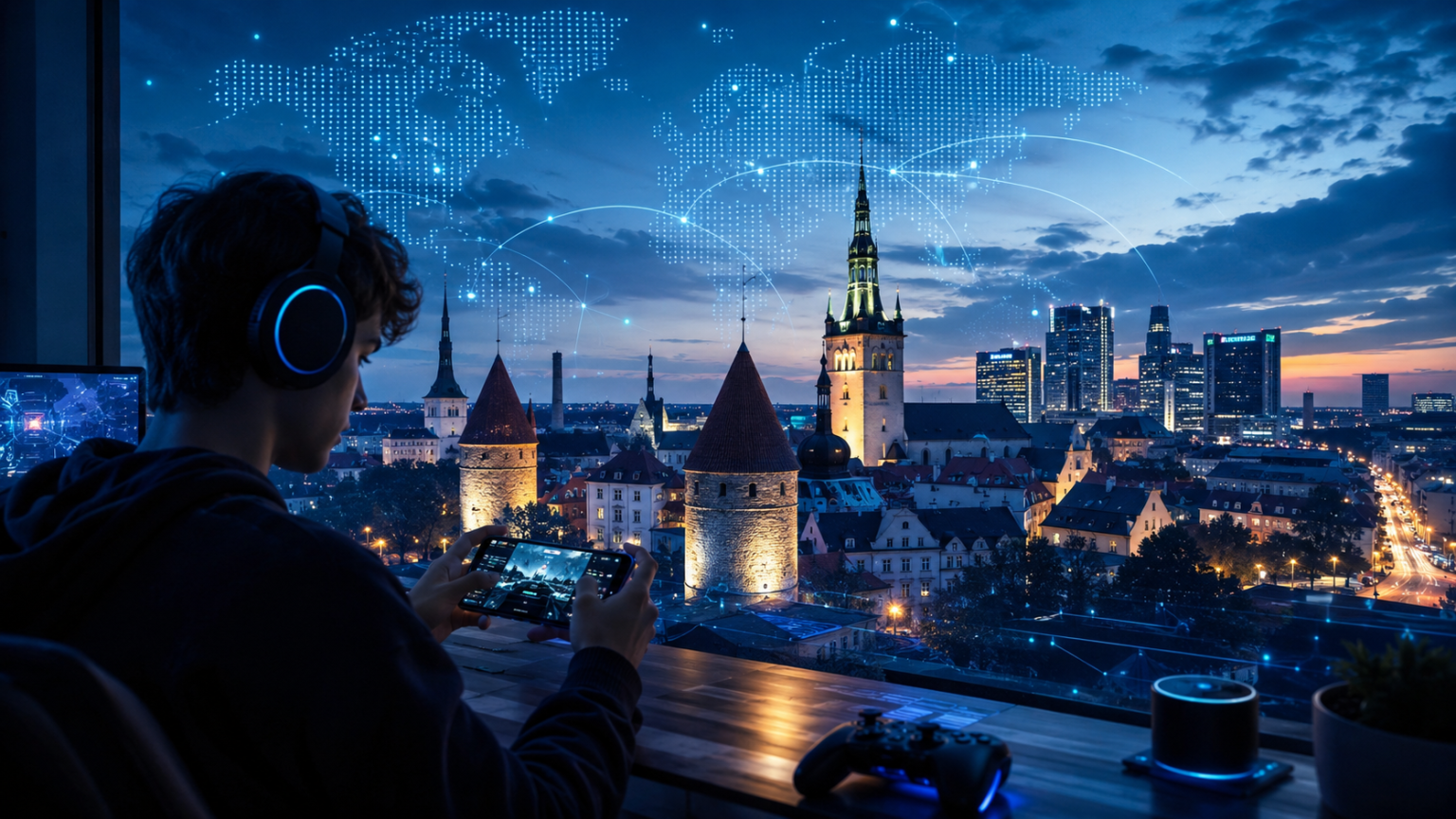

Estonia has spent years building a reputation as one of Europe’s most digitally advanced countries.
From online government services and digital identity systems to a thriving startup scene, the country has embraced technology more aggressively than many of its neighbours. That digital-first mentality is also shaping how people interact with entertainment, including gaming.
For players across Northern Europe, particularly in Finland and the Baltic region, Estonia is becoming increasingly relevant as online gaming becomes less dependent on geography and more focused on accessibility, user experience and technology.
Estonia’s Digital Reputation Gives It an Advantage
Estonia’s wider technology sector plays an important role in how online services connected to the country are perceived.
Users increasingly expect digital platforms to be fast, responsive and easy to understand. Whether they are accessing an online game store, a streaming platform or a browser-based gaming service, poorly designed interfaces now stand out immediately.
Estonia has built much of its international identity around solving digital problems efficiently.
That reputation naturally carries over into entertainment platforms.
Modern gaming services are expected to provide:
- fast-loading interfaces
- reliable mobile compatibility
- simple registration systems
- clear account controls
- secure payment processes
- straightforward navigation
These expectations now apply across almost every form of online gaming.
Gaming Is Becoming Increasingly Borderless
There was a time when gaming markets were heavily divided by geography.
Console games had region restrictions, physical copies could be difficult to import and players were often limited to services designed specifically for their home country.
That environment has changed dramatically.
Digital distribution platforms such as Steam, PlayStation Store, Xbox Store and Nintendo eShop have helped make gaming far more international. Players frequently use platforms operated from other countries without giving much thought to where the company itself is based.
Even so, regional differences still matter.
Currency, licensing, language availability and payment options can vary significantly depending on where a player lives. GamerBolt has previously explored how region locks shape the way people game around the world, and similar regional considerations continue to influence newer forms of digital entertainment.
This cross-border behaviour extends beyond traditional video games.
Finnish users researching virolaiset nettikasinot are effectively doing something familiar to modern gamers: comparing digital platforms operating in another nearby European market and looking at factors such as usability, available content, payment methods and overall experience.
The difference is that geography is becoming less important than how well a platform adapts to its audience.
Localisation Matters More Than Ever
Simply making a service available internationally is no longer enough.
Players expect platforms to feel familiar.
Language is one of the most obvious examples. A Finnish player is more likely to feel comfortable using a service if important information, menus and support documentation are available in Finnish.
But localisation goes much further than translation.
Payment methods matter too. Different countries have different preferences when it comes to cards, bank payments, digital wallets and mobile payment services.
Currencies also need to be presented clearly.
Good localisation removes friction.
The best international gaming platforms make the user feel as though the service was designed specifically for their region, even when the company itself operates across several countries.
This is becoming increasingly important as gaming audiences grow more global.
Mobile Gaming Has Raised Expectations
Mobile devices have changed the way people judge online platforms.
A few years ago, having a mobile version of a website was often enough.
Today, users expect mobile experiences to be every bit as polished as desktop ones.
Menus should be responsive. Games should load quickly. Account settings should be easy to access. Payments should not require awkward navigation.
Players are also becoming less patient with platforms that feel dated.
The enormous growth of mobile gaming has made smooth interface design a competitive advantage across the entire gaming industry.
Even players who primarily use PCs or consoles are now accustomed to well-designed mobile apps and responsive websites.
That means gaming companies increasingly have to think like technology companies.
Game Discovery Is Becoming Part of the Experience
Large content libraries create another challenge.
Having hundreds or even thousands of games sounds attractive, but massive libraries can become difficult to navigate.
We have already seen this problem across mainstream gaming.
Steam contains an enormous number of titles. Subscription services such as Xbox Game Pass regularly add new releases. Mobile app stores offer more games than most players could ever realistically explore.
As a result, discovery tools have become increasingly important.
Filters, categories, recommendations and search functionality help users find relevant content quickly.
The same principle applies across other gaming platforms.
Users increasingly expect to be able to filter games by:
- genre
- developer
- popularity
- release date
- gameplay style
- platform
- new additions
A well-organised catalogue can often feel more valuable than a larger but poorly structured one.
This is an area where strong interface design can make a significant difference.
Smaller European Markets Can Compete Globally
One of the biggest changes brought about by digital distribution is that smaller countries can participate in global markets far more easily.
A gaming company no longer needs to be based in the United States, Japan or another historically dominant gaming market to reach an international audience.
Developers from Finland, Sweden, Poland, Estonia and other European countries can distribute games globally almost instantly.
The Nordic and Baltic regions have already produced some major technology and gaming success stories.
Finland has given the world companies such as Supercell and Remedy Entertainment, while Estonia’s broader startup ecosystem has produced internationally recognised technology businesses.
That creates an environment where users are comfortable trying digital products from neighbouring markets.
Payments Have Become Part of Gaming UX
Payments used to feel like a separate part of the gaming experience.
That is no longer really the case.
Whether someone is buying a game, subscribing to a service, purchasing downloadable content or using another form of interactive entertainment, the payment process is part of the overall user experience.
Players expect transactions to be quick and understandable.
Unexpected fees, unclear currencies or complicated checkout systems can damage trust very quickly.
Modern gaming companies therefore pay considerable attention to payment design.
That includes clearly displaying costs, supporting familiar payment methods and making transaction histories easy to access.
For international platforms, this becomes even more important because payment expectations differ between countries.
Trust Is Becoming a Bigger Part of Platform Choice
Players now research platforms far more carefully than they once did.
Reviews, community discussions, Reddit threads, YouTube videos and comparison websites can all influence whether someone decides to use a particular service.
This means brand reputation can be established — or damaged — extremely quickly.
Users increasingly look beyond marketing claims.
They want to know whether a platform is reliable, whether other users have encountered problems and whether important information is presented transparently.
Gaming communities are particularly good at sharing experiences.
If a digital product has poor customer support, unreliable systems or frustrating account restrictions, players will usually discuss it publicly.
This has made transparency increasingly valuable.
Estonia Fits Naturally Into the Future of Digital Entertainment
Estonia’s relevance to gaming is ultimately part of a much larger story.
Entertainment is becoming more digital, international and platform-driven.
Players are comfortable moving between services, devices and countries in ways that would have seemed unusual when gaming was dominated by physical media.
The lines between traditional games, mobile entertainment, streaming, competitive gaming and other interactive services are also becoming less distinct.
What connects them is the technology behind the experience.
Users want fast platforms, intuitive interfaces, strong mobile support and systems that feel trustworthy.
Estonia has spent decades building a reputation around exactly these kinds of digital experiences.
That does not automatically mean every gaming service associated with the country will succeed.
Individual platforms still need to deliver.
However, Estonia’s technology-focused image gives companies operating within its wider digital ecosystem a strong foundation.
As European gaming continues to become more international, Estonia is likely to remain an interesting market to watch.
The countries that succeed in the next generation of online entertainment may not necessarily be the largest ones.
They may simply be the ones that understand digital users best.
