


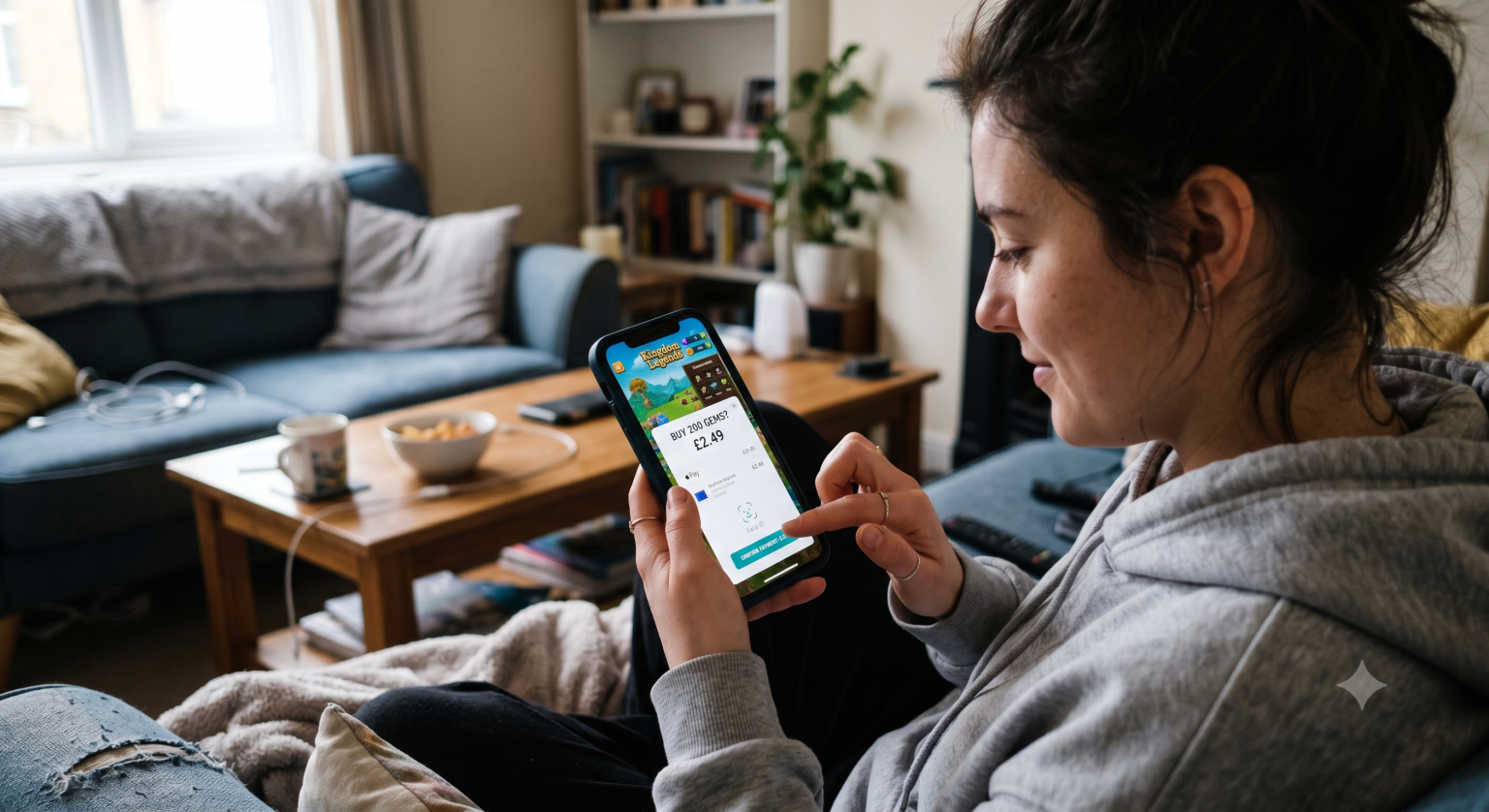

Gaming used to make payment feel separate from play. You bought a cartridge, a disc or a download, then the game began. Mobile gaming changed that relationship. The store, the device, the account and the game all moved closer together.
Now a player can unlock content, buy a cosmetic item, renew a subscription or add a small upgrade without leaving the phone in their hand. That shift did not only change games. It changed what players expect from digital entertainment.
The phone became the game space
Smartphones turned gaming into something more casual, portable and always nearby. A player no longer needed to sit at a console or PC to interact with a game world.
With Angry Birds AR: Isle of Pigs, the phone became part of the play space itself, combining AR features, iOS-based gameplay and optional in-app purchases in a format built around the device.
That matters because the phone became more than a screen. It became the place where play, identity, payment and progress all meet.
App stores made small purchases feel normal
Once mobile games became everyday entertainment, small digital purchases became easier to understand. Players learned the difference between a one-time unlock, a consumable item, a subscription and an expansion.
Apple groups in-app purchases into categories such as subscriptions, consumables and non-consumables, which is exactly the kind of structure that made mobile spending feel more familiar to players.
For gamers, this changed the mental model. Spending was no longer always a large upfront decision. It could be a small action inside a game, tied to timing, progress or convenience.
A receipt from the phone-first era
The modern gaming checkout often has a familiar shape:
- The purchase appears inside the app
- The amount feels small enough to decide quickly
- The account already knows the payment method
- The reward appears almost immediately
- The player returns to the game without much friction
This is why mobile payments became so powerful. They removed pauses. They made spending part of the same flow as play.
That design can be useful, but it also means clarity matters. Players should know what they are buying, how often they are charged and whether the item is permanent, temporary or consumable.
Phone payments moved beyond traditional games
The habits built inside mobile gaming did not stay there. Other app-based entertainment categories now use similar ideas: quick deposits, saved payment methods, short sessions and mobile-first account access.
A term like pay by mobile casino reflects that wider payment shift, where phone-based checkout language has moved beyond traditional games into other digital entertainment spaces. The comparison is not about treating every platform as the same. It is about recognizing how mobile gaming trained users to expect fast, simple payments from many kinds of apps.
Convenience still needs guardrails
Easy payments can also create problems when users do not notice how quickly charges add up. This is especially true when games use ads, paid content or child-accessible devices.
The FTC’s alert on video games, ads and unexpected payments is a reminder that payment settings, approvals and in-app purchase risks need to be understood before a device is handed over or left with saved payment access.
The lesson is not that mobile spending is bad. It is that friction sometimes protects the user.
Gaming changed payment expectations
Phone-first gaming made digital spending faster, smaller and more integrated. Players now expect payment to feel as smooth as the rest of the app.
That expectation will keep shaping entertainment platforms. The challenge is making the payment flow simple without making it invisible.
