


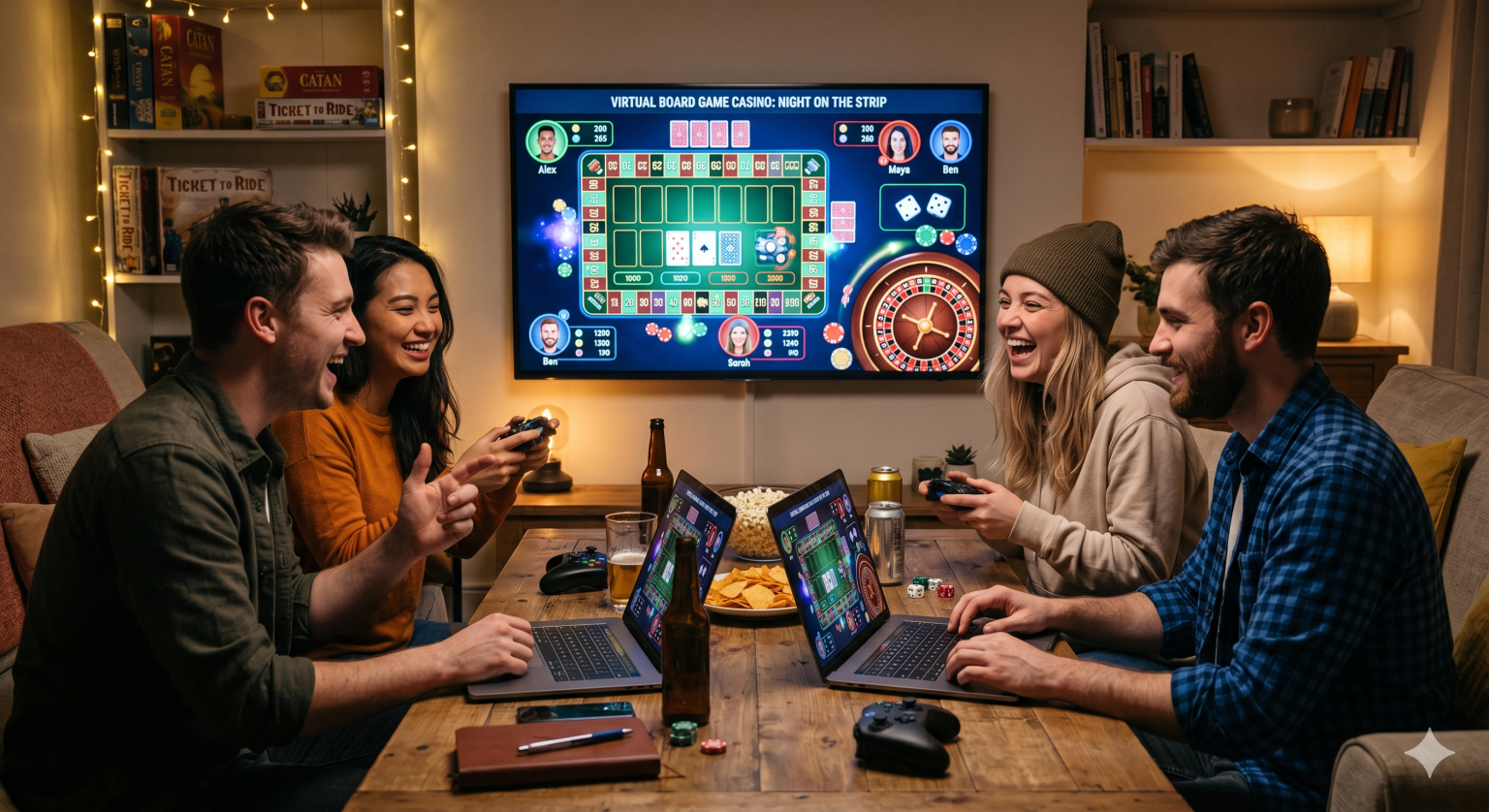

Hosting a modern, multiplayer virtual game night has evolved far beyond a basic screen-share over a laggy video call. With the rise of high-fidelity WebGL graphics, real-time WebSocket configurations, and live-streamed table environments, turning your gaming rig into a local hosting hub requires a specific understanding of browser optimization.
When you are coordinating real-time inputs across a digital lobby, systemic performance drops can ruin the competitive pacing of the evening. Setting up a stable browser environment requires checking your hardware acceleration settings. When auditing top interactive entertainment pages, media hubs like Sandiegobeer have noted a massive influx of desktop users moving to web-based platforms, particularly on their breakdown of the best roulette sites where high-refresh-rate layouts demand immediate server responses. Ensuring that your local hardware allocations can handle these instantaneous, frame-accurate asset updates is the foundation of a fluid multiplayer session.
Let’s look at the technical pipeline required to build a flawless, low-latency web gaming configuration.
Optimizing the Host Engine: Browser Allocations and Hardware Acceleration
Most modern virtual tabletops and digital table games run natively inside Chromium-based browsers. While convenient, raw browser gaming can easily bottleneck system memory if your background processes are unoptimized.
To maximize your frame delivery, you must dive into your advanced settings:
- Hardware Acceleration: Ensure this toggle is active. This forces your browser to offload complex vector graphics and 3D canvas rendering directly onto your GPU rather than taxing your CPU’s primary cores.
- ANGLE Graphics Backend: Accessible via flags, switching your rendering API from default to OpenGL or Direct3D11 can actively stabilize frame pacing on systems using modern graphics card drivers.
- Tab Sleeping and Memory Savers: Disable these features specifically for your active gaming URLs. If a browser puts an active WebSocket connection to sleep while you are interacting on a secondary monitor or Discord stream, your session will suffer immediate sync drops.
Optimizing these underlying software pipelines guarantees that your system maintains hardware parity when running resource-heavy web applications, an essential component covered in our deep-dive bitcoin casino guide.
Synchronizing the Lobby: WebRTC Protocols vs. Screen-Sharing
The secondary breakdown point of a virtual party is visual feedback synchronization. If the host is running a physics-based digital wheel or shuffling a heavy deck of procedural assets, sharing a raw desktop video stream creates massive visual latency for connected clients.
Instead of running heavy third-party streaming clients that capture screen buffers at low bitrates, look for gaming hubs that utilize native WebRTC pipelines or multi-directional client-side rendering. When games are rendered directly on the client’s local machine via public parameters sent from a server, your bandwidth footprint drops to almost zero.
According to standardized open-source web graphics documentation maintained by the W3C Consortium, prioritizing direct GPU canvas queries over traditional pixel-buffer captures reduces interactive control lag by up to 80%. This prevents data packet collisions, ensuring that when an interactive asset updates on your dashboard, your friends see the outcome across their screens in real time.
Securing Server-Side Integrity and Session Stability
Beyond configuring your local hardware layer, the platforms you choose for your digital entertainment must possess verifiable infrastructure stability. When selecting software environments or digital lobbies for your guests, pay close attention to compliance frameworks and auditing variables.
Authoritative licensing structures provide transparent benchmarks for server-side stability. Independent regulatory entities like the Malta Gaming Authority require platforms to pass continuous stress testing and strict Random Number Generator audits. These evaluations ensure that game states cannot stall mid-loop due to server-side traffic spikes. Choosing verified platforms ensures that your virtual lobby stays live all night without unprompted middleware crashes.
Frequently Asked Questions
Why does my browser lag when streaming a virtual board game on Discord?
Discord screen-sharing captures desktop pixel arrays, which requires massive real-time CPU encoding. When run alongside a heavy WebGL game lobby, the two applications fight for system resources. Activating GPU hardware acceleration in both your browser and Discord settings mitigates this system conflict.
What is the ideal network speed required to host a virtual game night?
While connected players only need minimal downstream bandwidth to capture game state data packets, the host requires a stable upload connection of at least 15 Mbps to handle concurrent live audio, video synchronization, and peer-to-peer asset calls.
Are web-based casino and board games completely fair to all connected clients?
Yes, provided the platform uses certified cryptographic seeds. Platforms audited by regulatory bodies use server-side execution frameworks that calculate outcomes independently of individual client connection qualities, ensuring a level playing field for everyone in the session.
The Perfect Virtual Setup
Building an exceptional virtual game environment ultimately relies on maximizing data throughput and removing software friction. By offloading processing tasks directly onto your graphics hardware, choosing platforms with audited server frameworks, and protecting your data streams, you can replicate the tactile excitement of an in-person event straight from your desktop monitor.
Gambling involves risk. Please play responsibly and only wager what you can afford to lose. If you feel gambling is becoming a problem, visit BeGambleAware.org or call 1-800-GAMBLER.
