


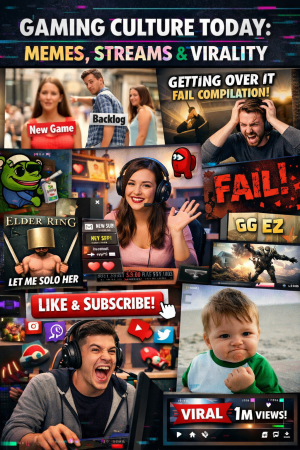

Gaming Culture Now Lives on the Timeline
Gaming is no longer just something that happens on a screen at home. People can feel part of the culture without even touching a controller. Essentiually, modern gaming culture spreads when a moment is easy to watch, remix, and share. That is why memes and clips can feel as important as the game itself.
Memes Turn Small Moments Into Shared Language
A meme can start as a single screenshot, a goofy animation, or a line of dialogue that hits at just the right time. A social gaming site such as Sportzino shows how play and shareable moments can live side by side. Once a joke becomes recognizable, it turns into shorthand for identity, humor, and belonging.
Memes work because they are simple to copy and flexible to adapt. The same format can celebrate a win, roast a mistake, or explain a complicated game idea in seconds. Over time, certain images and phrases become a kind of community slang.
Streaming Turns Play Into a Live Hangout
Streams turn a game session into a shared event, with reactions happening in real time. Viewers do not just watch; they influence the vibe through chat, emotes, and running jokes.
Chat Makes the Game Bigger
In a fast chat, tiny moments get highlighted and repeated until they become the main story of the stream. This is how one accidental fail, one clutch play, or one funny comment can stick for weeks.
Clips Keep the Stream Alive
Short highlights let a live moment reach people who were never in the stream. A single clip can send new viewers back to the full video, and it can also inspire remixes, edits, and meme captions.
Watch For: The strongest stream moments usually have a clear setup and a fast payoff. When that happens, the chat often supplies a caption that travels with the clip.
The Viral Loop: From Clip to Trend
Virality in gaming often follows a repeatable pattern: a moment gets captured, the internet adds context, and the remix becomes bigger than the original. Platforms reward content that is easy to understand quickly, so creators learn to frame a moment like a tiny story.
The result is a loop where games, creators, and audiences constantly feed each other new formats.
- Hook fast: Open with the funniest, strangest, or most impressive second. Then let the rest explain itself.
- Keep it legible: Use on-screen text or a clear caption so newcomers know what is happening.
- Build a repeatable format: A catchphrase, a challenge, or a reaction template helps the joke spread.
- Invite participation: Give viewers a simple prompt to duet, stitch, or recreate the moment.
- Reward the community: Shout-outs, callbacks, and inside jokes encourage fans to keep sharing.
Virality Has Side Effects
When everything is shareable, players and creators can feel pressure to perform, even during casual play. That pressure can make gaming feel less relaxing and more like a constant audition for attention. It can also push people toward extremes, because calm moments rarely get clipped.
Healthy communities usually set clear boundaries, like moderation rules and credit for original clips. Simple habits—such as asking before reposting and avoiding dogpiles—can protect creators and keep fandom spaces welcoming. The goal is not to kill the joke; it is to keep the joke from turning into harassment.
Games also shape the culture through design choices that support sharing. Built-in replay tools, photo modes, and easy clip exports can amplify positive creativity. Meanwhile, good reporting tools and safety features can limit the worst behavior.
A Culture Built To Be Remixed
Gaming culture today is a mix of play, performance, and remix, with memes and streams acting like the glue. The healthiest spaces leave room for both skill and silliness, so more people can join in.
As new platforms rise, the core pattern stays the same: a moment lands, the internet responds, and the community turns it into culture.
